
Sweeteners in Cuisine
About 13% of U.S. caloric intake is added sugar1. Of that, about half is table sugar (sucrose) from sugar cane or sugar beets, and about another half is corn syrup. Only about 2% of sweetener intake is honey, maple syrup, and other edible syrups.
But highly-refined sugars and corn syrup are recent inventions – most cuisines began developing far earlier. So, how did cuisines sweeten before? It was varied. In Korea, rice was malted to create syrup, ssal-jocheong; a similar malted syrup, mizuame, was used in Japan; the Incas boiled down sugar from the root of a tuber, the yacón; for much of North Africa, molasses was made from the sugary stalks of sorghum; in the Middle East, there was date syrup and pomegranate molasses; in the Mediterranean, there was honey – pick up an Ancient Roman cookbook, Apicius’ De Re Coquinaria, and you’ll realize quickly that honey was the sweetener; in Southeast Asia, there was palm jaggery and coconut sugar; in New Guinea, then India, then Persia, there was cane sugar, which Christopher Columbus later introduced to the Caribbean and South America; in Biblical accounts, there was manna – some sort of tree syrup, perhaps – a sweetener of even more ancient times.
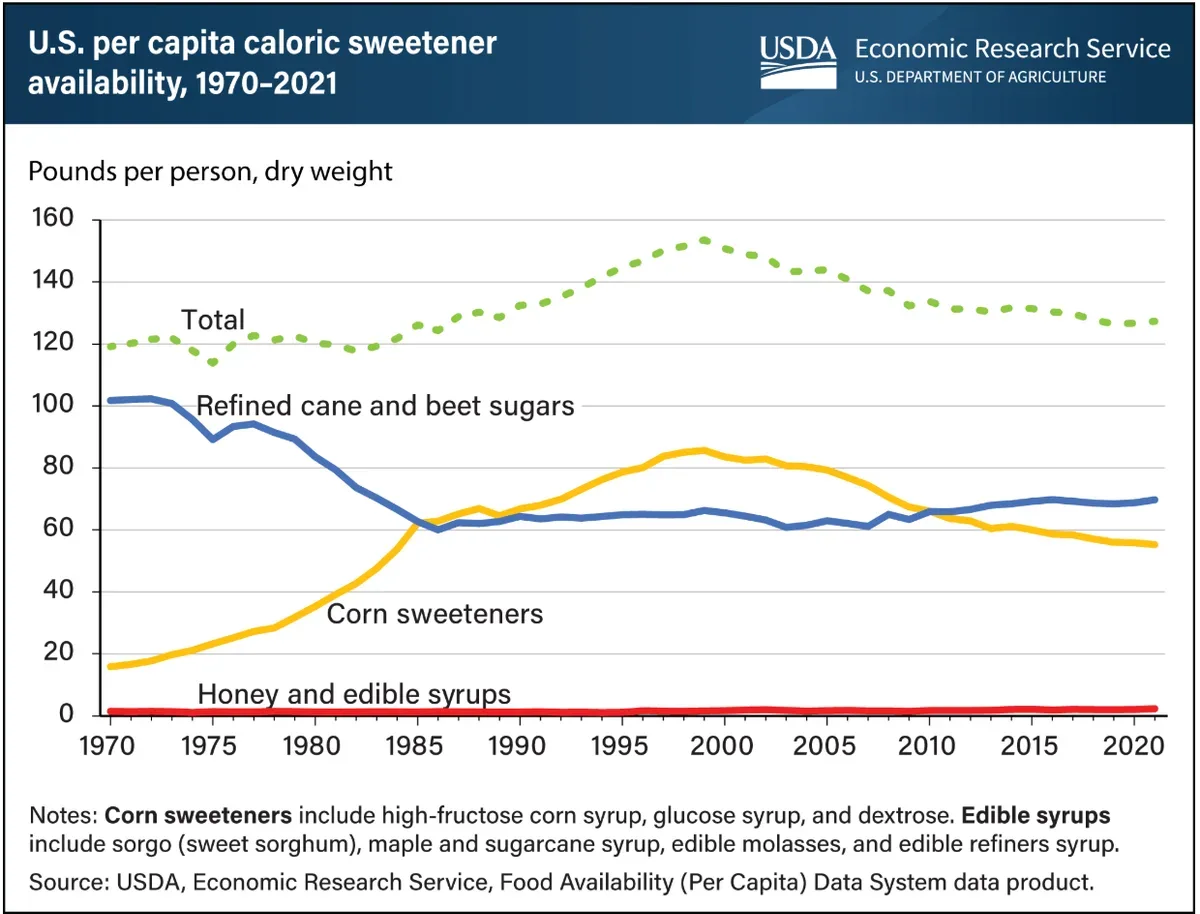 U.S. per capita caloric sweetener availablity, 1970-2021, USDA.
Sweetness may be one of the only – or the only – universally enjoyable tastes2. When sweetness comes with flavors – the malty richness of ssal-jocheong, the acidity of pomegranate molasses – cuisines develop to accommodate these flavors; they become characteristic. Even in an age of abundance, these historical limitations persist. While Pad Thai was invented long after the introduction of refined sugars, its taste is defined by its use of palm sugar. Try to make Pad Thai with refined sugar, and see how much of the taste is lost – not just in flavor, but familiarity.
A Brief History of Sweetness in the Northeast
Before the U.S. was colonized, Native American tribes in the Northeast had a few options for sweetness – that is for sure – though we have limited records of the cuisine. Without a doubt, they used tree syrups like maple and hickory. There are also accounts – throughout the Americas – of Native Americans cooking down the simple sugars in young corn stalks to create a type of corn syrup. Of course, there was also naturally occurring sweetness in fruits – perhaps even cooked down, like apples, to create syrups – and tubers. When the English colonized New England, they brought with them the honeybee – to Native Americans, sometimes, “the white man’s fly” – as early as 1622. These early colonists had the aforementioned sweeteners, such as tree syrups and fruits, as well as the newly introduced honey3.
But around the same time, sugarcane-derived sugar imported from South America (Brazil) and the Caribbean (Barbados) was becoming popular ‘at home’ in England. As of around 1650, it became a household item4. Soon, the same trend followed in the colonies, and sugar – especially, molasses, for the lower class – became the standard sweetener. Over the course of just a century and a half, from when Columbus first brought sugarcane to the Americas on his second voyage (1493)5 it had begun to transform the agricultural landscape of the Caribbean and parts of South America. As demand increased in Europe and the nascent United States, production dramatically increased. By the 1850s, the New York Times described, sugar – also becoming increasingly refined – was second only to salt as a necessity for the American people6. For the Englishman, as of 1900, it was about a fifth of their caloric intake7. Poor people continued to rely on molasses; along with bread and tea, it formed the bulk of the diet of the lower class8.
Cane sugar was not without competition. Around the mid 19th century, two primary alternatives became popular: beet sugar and sorghum syrup. Spreading from Prussia, to France – where sugar production was a formative industry – to the Americas, sugarbeets began to be cultivated as a cheaper alternative to cane sugar. The first ever sugarbeet factory in the U.S. was founded in Northampton, MA in 1838 – after an earlier unsuccessful attempt in Philadelphia in 1830 – driven both by a desire for independence from French-produced beet sugar and a drive to find sustainable methods for growing sugar without reliance on slave labor, especially the notoriously harsh slavery found on sugar plantations9. The factory shut down in 1840, and sugar beet production moved first to California and then the Midwest. Today, sugarbeets make up over half of the domestic sugar-producing crop (less globally), surpassing sugarcane. Sorghum followed a somewhat similar path. It was first introduced in the Northeast; the horticulturalist William Robert Prince distributed sorghum seeds – originally from China and Africa – in Flushing, Queens10. Methods for sorghum syrup manufacture improved in the U.S. by virtue of government subsidy and out of interest for additional sugar alternatives; its production, like the sugarbeet, soon left the Northeast, however, for the Midwest and Southern United States. In the mid to late 19th century, when corn syrup – produced by acid hydrolysis, literally the cleaving of starches into simple sugars using acid, usually hydrochloric acid – was invented, sorghum molasses became largely a cottage industry; beet sugar production, on the other hand, remained purely industrial11.
All the meanwhile, sugar refineries become of increasing economic and political importance. At this time, New York, the nucleus of sugar production, had ten refineries and had achieved relative independence from foreign refined sugar producers12. Techniques for refinement continued to improve – a far cry from sugar refinement using ox blood, the primary method, in the decades and centuries prior.
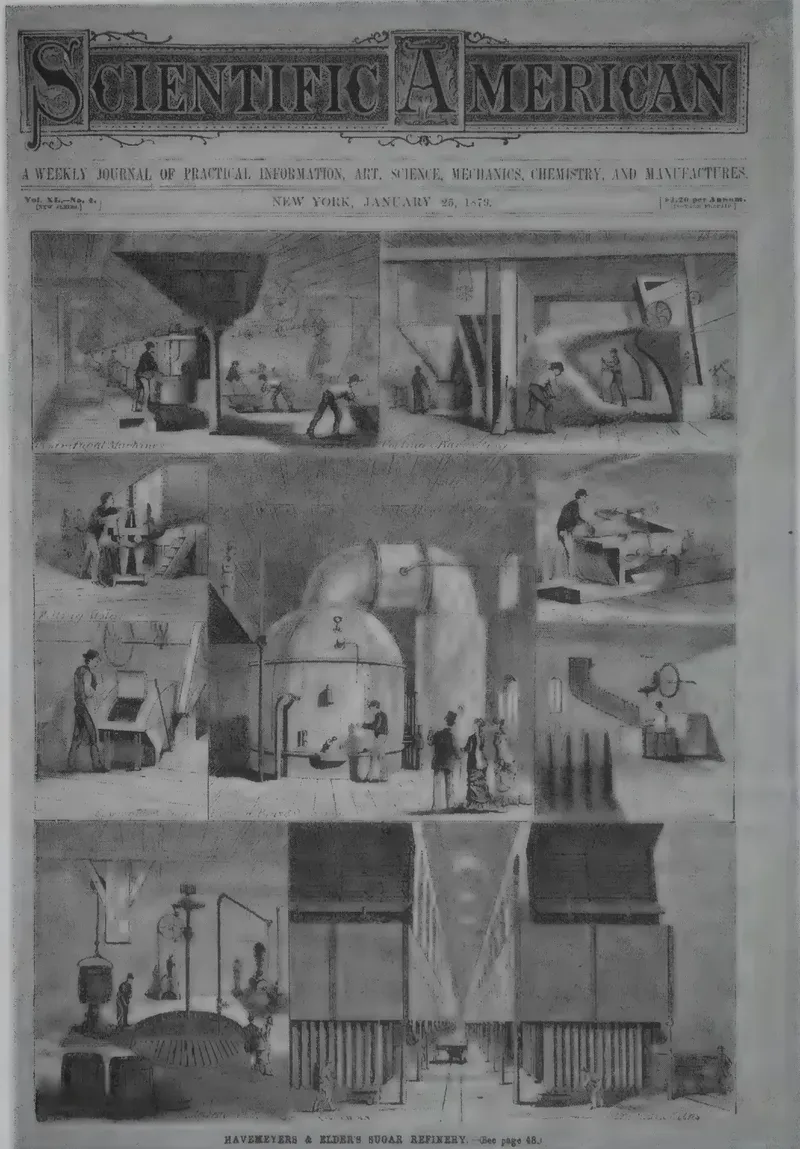 A look inside the Domino (Havemeyer) sugar refinery, Scientific American.
Present Sweeteners in the Northeast
While the sugar industry is no longer the dominant chunk of the economy – and tax revenue – as in the 19th century and early 20th century, sugar production is alive in the Northeast. Domino (previously, W. & F.C. Havemeyer Company) still produces sugar out of Yonkers, though its refineries are now further distributed. Some corn syrup may be produced in the Northeast; Karo, the largest corn syrup manufacturer in the United States, used to have refineries in New York, but now exclusively produces out of Chicago. But neither corn syrup nor granulated sugars – though they may be refined in the Northeast – are made from Northeastern produce. Sugarcane comes largely from the Southern states, Florida and Louisiana, as well as Mexico, the Caribbean, and Central and South America. Sugarbeets are grown primarily in the midwest. Corn, though a longstanding and important crop for the Northeast – is also produced primarily in the Midwest. Due to cost, it seems to me unlikely these industries will ever thrive in the Northeast.
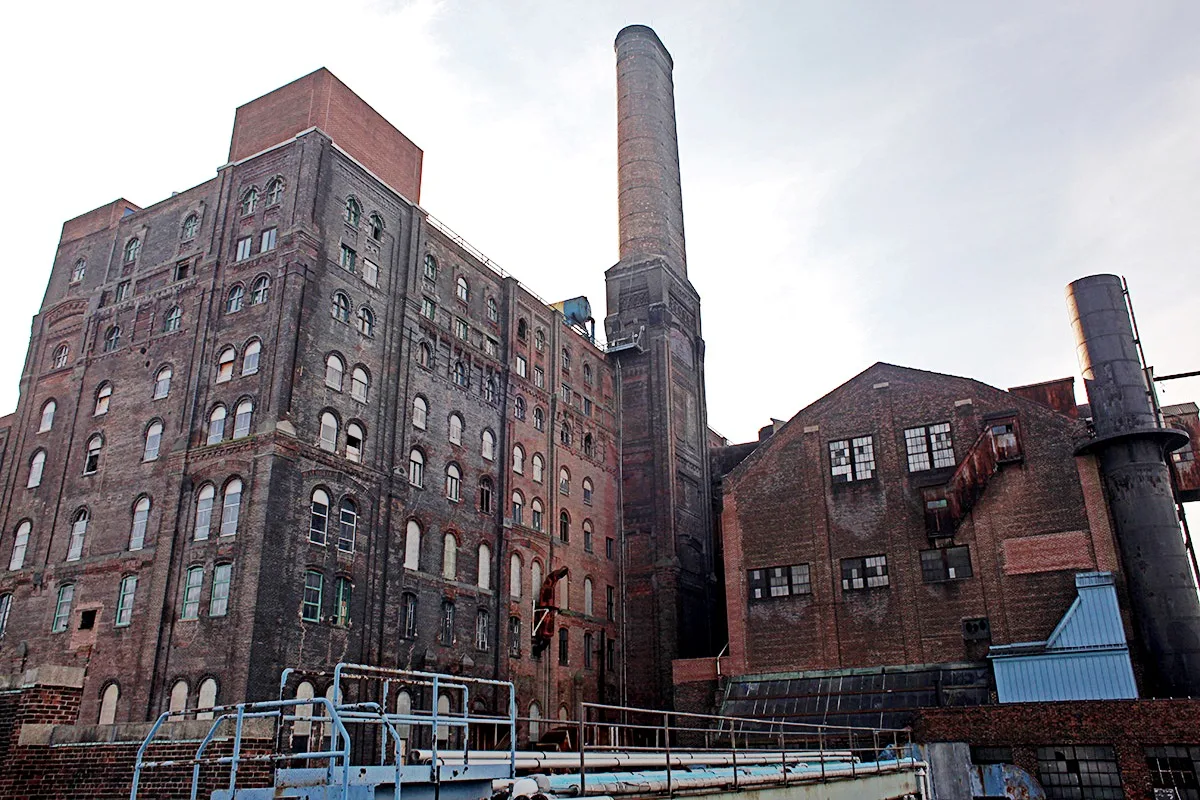 The Domino (Havemeyer) sugar refinery in Williamsburg, Brooklyn in the present day
So – in our unique place and time – what do sweeteners of the Northeast look like? I’ll give an introduction to the types we think about without going into too much depth:
- Sap syrups (maple, birch, hickory, etc.)
- Honey
- Sorghum (grown in NY, notably by Empire Syrups, though primarily in the South)
- Fruits (and fruit syrups, such as apple cider syrup)
- Naturally sweet produce (such as root vegetables, or sugary grain like sweetcorn)
- Enzymatic and processed sweeteners (here, I break it into two categories)
- Lab-synthesized enzymatic sweeteners (such as the second-stage, the ‘fructosification’ or high-fructose corn syrup or the sweetening of oat milk using amylase) and hydrolyzed sweeteners (as in the first stage of corn syrup production)
- Natural enzymatic sweeteners: those derived from mold, such as koji (aspergillus oryzae) or tempeh (rhizopus oligosporus or rhizopus oryzae) or malted sweeteners (cf. Korean brown rice syrup or beer wort)
Each of these sweeteners – like palm jaggery or date syrup – has a unique flavor that demands creativity; in other words, it pushes us to consider cuisine. These are the primary sweeteners we experiment with. What the future of sweetness in the Northeast may look like, we do not know!
If you have corrections, comments, or additions to the above information, please send us a note at info@northeastlarder.com
Footnotes
Bibliography
Breslin, Paul A. S. “An Evolutionary Perspective on Food and Human Taste.” Current Biology 23, no. 9 (2013): R409-R418. https://doi.org/10.1016/j.cub.2013.04.010.
Empire Syrups. “Empire Syrups: New York Sorghum.” Accessed 2026. https://empiresyrups.com/.
Mintz, Sidney W. Sweetness and Power: The Place of Sugar in Modern History. New York: Viking, 1985.
Warner, Deborah Jean. Sweet Stuff: An American History of Sweeteners from Sugar to Sucralose. Baltimore: Johns Hopkins University Press, 2011.
Welsh, Jean A., Andrea J. Sharma, Bethene Grellinger, and Miriam E. Vos. “Consumption of Added Sugars is High in the United States, 2005–2008.” NCHS Data Brief, no. 87. Hyattsville, MD: National Center for Health Statistics, 2011. https://www.cdc.gov/nchs/products/databriefs/db87.htm.
Footnotes
-
Welsh, J. A., et al. (2011). “Consumption of Added Sugars is High in the United States, 2005–2008.” NCHS Data Brief, no. 87. CDC Website. ↩
-
Breslin, P. A. S. (2013). “An Evolutionary Perspective on Food and Human Taste.” Current Biology / ScienceDirect. Link. ↩
-
Mintz, S. W. (1985). Sweetness and Power: The Place of Sugar in Modern History. Page 1; Warner, D. J. (2011). Sweet Stuff: An American History of Sweeteners from Sugar to Sucralose. Page 1. ↩
-
Warner, D. J. (2011). Page 12. ↩
-
Mintz, S. W. (1985). Page 5. ↩
-
Mintz, S. W. (1985). Page 2. ↩
-
Warner, D. J. (2011). Page 13. ↩
-
Warner, D. J. (2011). Page 32. ↩
-
Mintz, S. W. (1985). Page 3. ↩
-
Empire Syrups. https://empiresyrups.com/. ↩
-
Mintz, S. W. (1985). Page 91. ↩
-
Mintz, S. W. (1985). Page 6. ↩