
Background
The world’s largest food industries create excesses of plant material – byproducts – during their production processes. The macronutrient profile of many of these byproducts is similar and ripe for valorization: primarily fiber and protein. Take the oil industry as an example. Canola/rapeseed and sunflower oil production alone are projected to generate about 78.3 million tonnes of meal and presscake co-products globally in 2026/2027.1 The brewing industry, likewise, produces about 37.8 million tonnes of spent grain annually.2 Soy okara alone – a byproduct of soymilk and tofu production – is estimated at about 14 million tonnes per year.3 Many such examples exist, but these three industries alone produce byproducts estimated to contain roughly 34–35.5 million tonnes of crude protein annually.4 Not taking into account projected growth – as newly industrializing countries increase consumption of refined products – the opportunity for upcycling these byproducts is enormous.
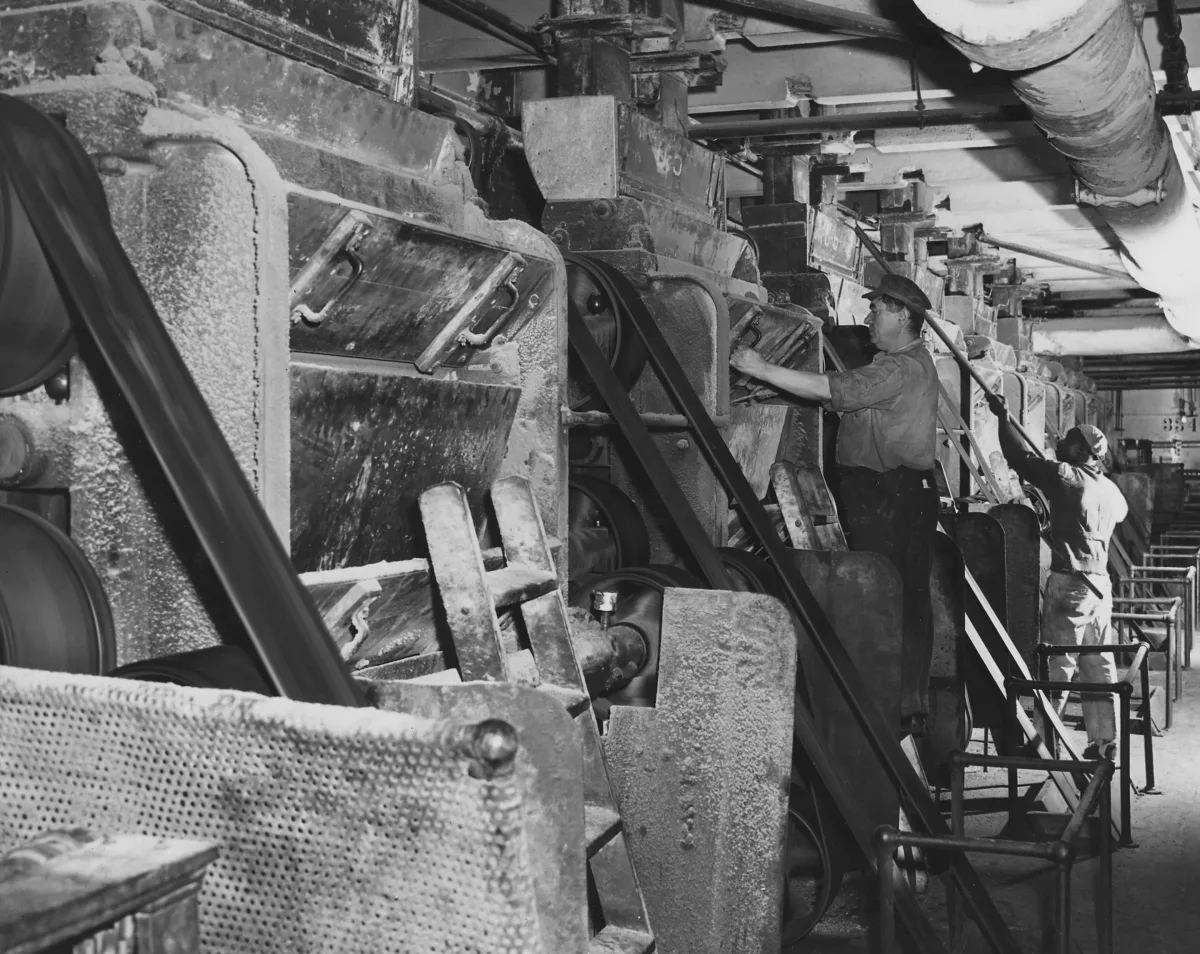 Workers feed flaxseed into roller grinders, the first step in extracting linseed oil, circa 1945. Photo: Wikimedia Commons

To focus only on protein, let’s reframe the opportunity in terms of per capita consumption. Using the FDA’s reference Daily Value of 50 grams of protein per person per day, or 18.25 kg per year, that amount of protein contained in just these three byproduct streams is equivalent to about 1.8–2.0 billion annual Daily Values.5 A rough market comparison makes the point even clearer. If this same amount of protein were replaced with a low-cost commodity protein such as soybean meal, it would have an illustrative gross commodity value of roughly $22 billion at recent global prices.6 This does not mean all of these byproducts can immediately become human food, nor are these gross comparisons realizable market values. Processing losses, food safety, protein quality, digestibility, and regulations are important. But of utmost importance is consumer acceptability, that is, deliciousness. To underscore this point, take the equivalent economic impact of replacing protein for which there is additional demand. At explicitly stated protein-content assumptions, the gross commodity equivalent would be about $600 billion for poultry7 and could exceed $1.4 trillion for beef.8
If we can efficiently process these byproducts into delicious consumer products, the gains are profound both environmentally and economically. Life-cycle research on food waste management shows that conventional waste pathways can create significant environmental burdens, including greenhouse gas emissions, while circular reuse and valorization can recover nutrients and reduce the need for new raw materials.910 Reviews of waste-to-protein systems also argue that food-safe and feed-safe side streams from food and drink industries can become a meaningful part of future protein supply, provided that they are transformed into products people actually want to eat.11 The economic case is also clear: the global protein ingredients market is estimated at about $58–72 billion in 2026 and is projected to keep growing, meaning these byproducts sit next to a large and expanding market for functional protein ingredients.1213
Let’s take a brief look at these three byproducts, which we believe can be made exceptionally delicious:
1. Brewers’ Spent Grain, or BSG
Brewers’ spent grain is the malt and grain residue produced during beer production. In taste it is somewhat neutral, with predictably malty and grain-like undertones, though some can be darker, roasted, or bitter depending on the brewing process and whether it came into contact with hops.2
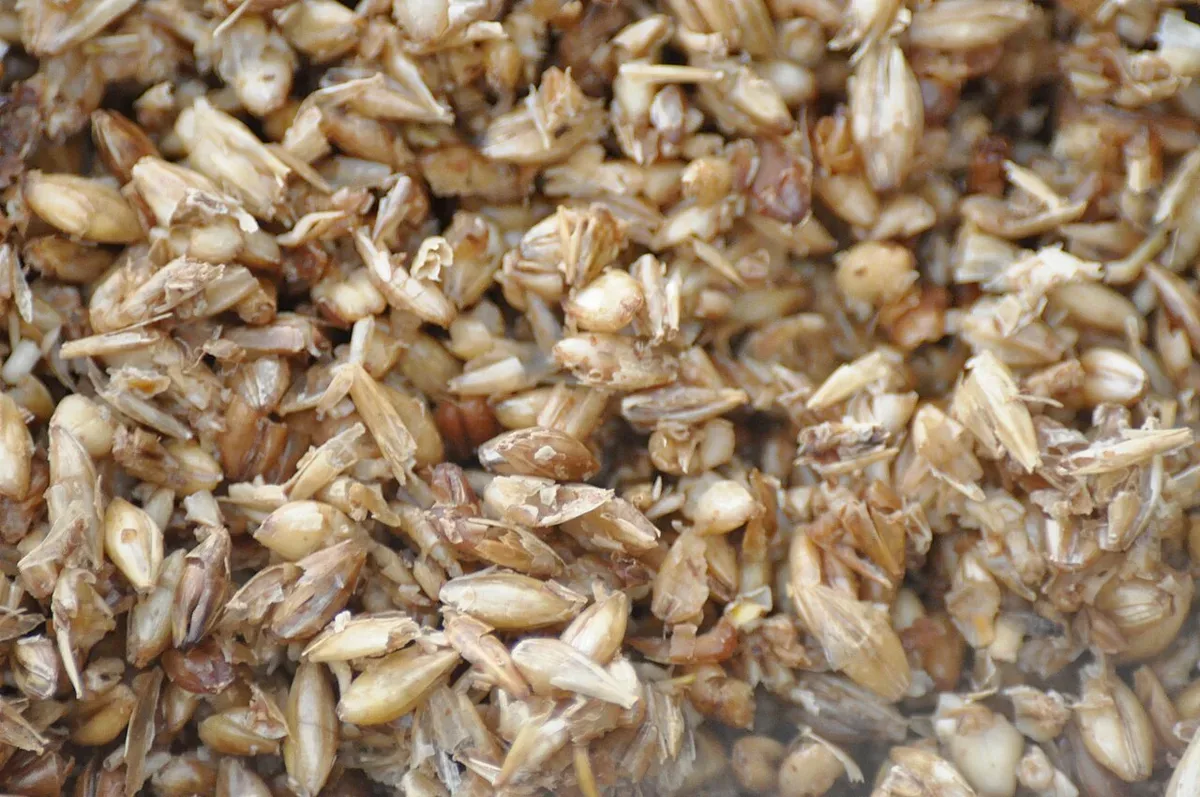 Wet grain hulls left after brewing. Photo: Wikimedia Commons

BSG represents about 85% of brewing-specific waste by weight. About 20 kg of wet BSG is produced for every 100 liters of beer. The primary difficulty in upcycling BSG is that it is usually 70–80% water, which makes it highly perishable. On a dry basis, it contains roughly 20–22% protein, along with a large amount of fiber.2 With suitable drying mechanisms, the upcycling potential would be much greater.
About 70% of BSG is currently used as animal feed.14
2. Presscakes from Oil Production
Presscakes and meals are the solid materials left after oil is removed from seeds. “Presscake” usually refers to the residue of mechanical pressing, while “meal” can also include material produced through solvent extraction. The main examples here are canola/rapeseed and sunflower, though there are others: peanut, camelina, sesame, flax, coconut, and so on. The upcycling of these co-products, therefore, is a fairly regional problem. Their composition varies with the seed and extraction method, but the remaining material contains protein, dietary fiber, carbohydrates, minerals, residual fat, and various plant compounds.15
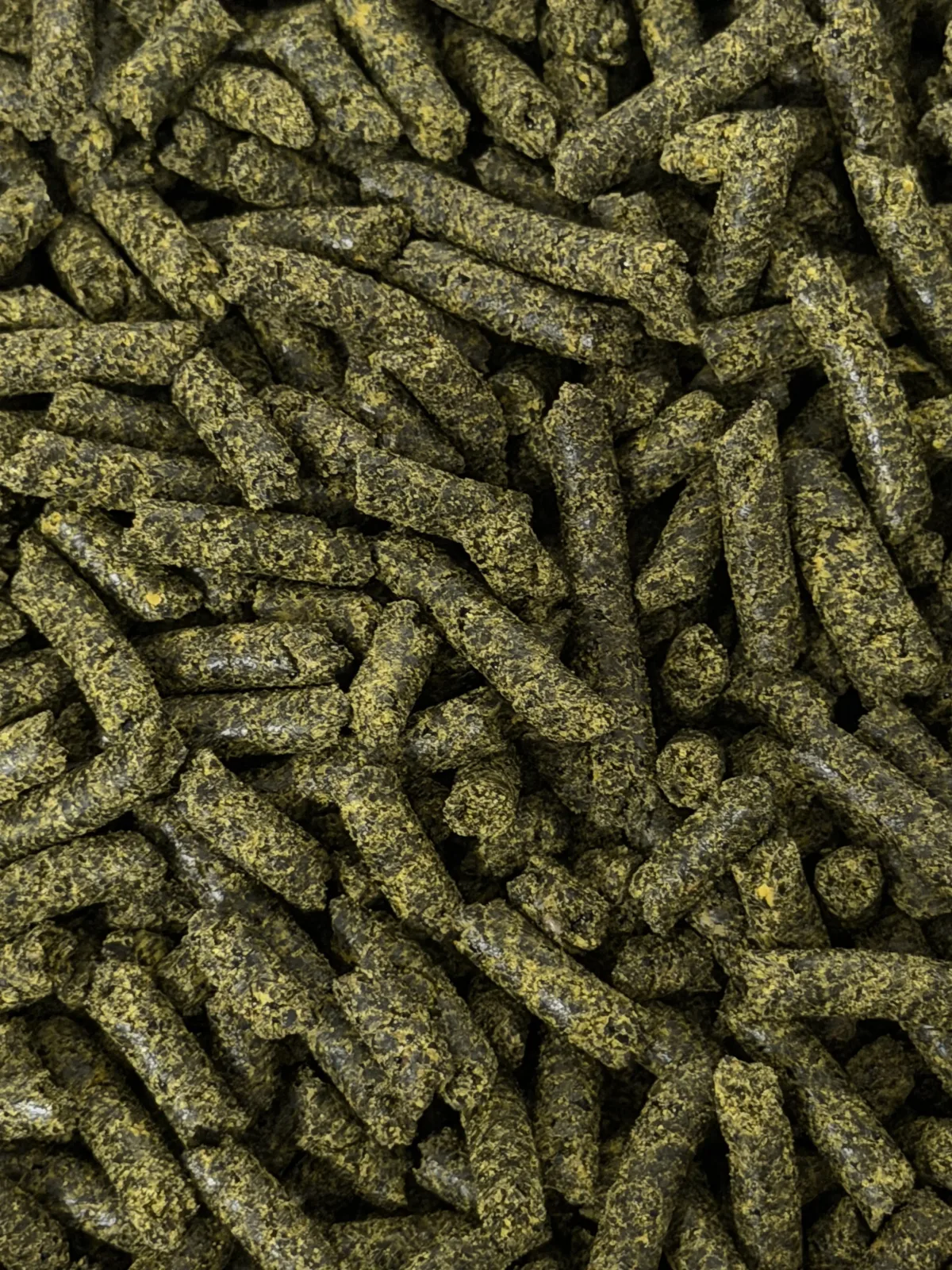 Canola presscake, the starting material for our canola presscake garum experiment.
Canola/rapeseed and sunflower are especially produced at large scale. USDA’s July 2026 data project about 53.46 million tonnes of rapeseed meal and 24.85 million tonnes of sunflower seed meal globally in 2026/27.1 One review reports representative crude-protein contents of 42.8% for rapeseed oil cake and 35.6% for sunflower oilseed cake.15 Applying those representative figures to the USDA production totals gives a rough estimate of 31.7 million tonnes of crude protein per year, equivalent to about 1.7 billion annual 50-gram Daily Values.45
Both require attention and are not without caveats. Rapeseed can contain bitter or pungent compounds, especially glucosinolates, along with other compounds that affect flavor and digestibility; canola varieties were bred for much lower glucosinolate and erucic-acid levels but can still present flavor and processing challenges. Sunflower presscake can be more approachable, but its valorization is non-trivial.1516
3. Residues from Plant-Based Milk and Similar Products
Plant-based milk and tofu production can also create insoluble residues (okara, in the case of soy milk production). Okara is the byproduct of filtering processed soybeans: the liquid becomes the milk or tofu base, while the pulp still contains protein, fiber, fat, minerals, and carbohydrates.3 Oats, almonds, rice, peas, and other plant materials can produce compositionally different residues depending on the manufacturing process.11
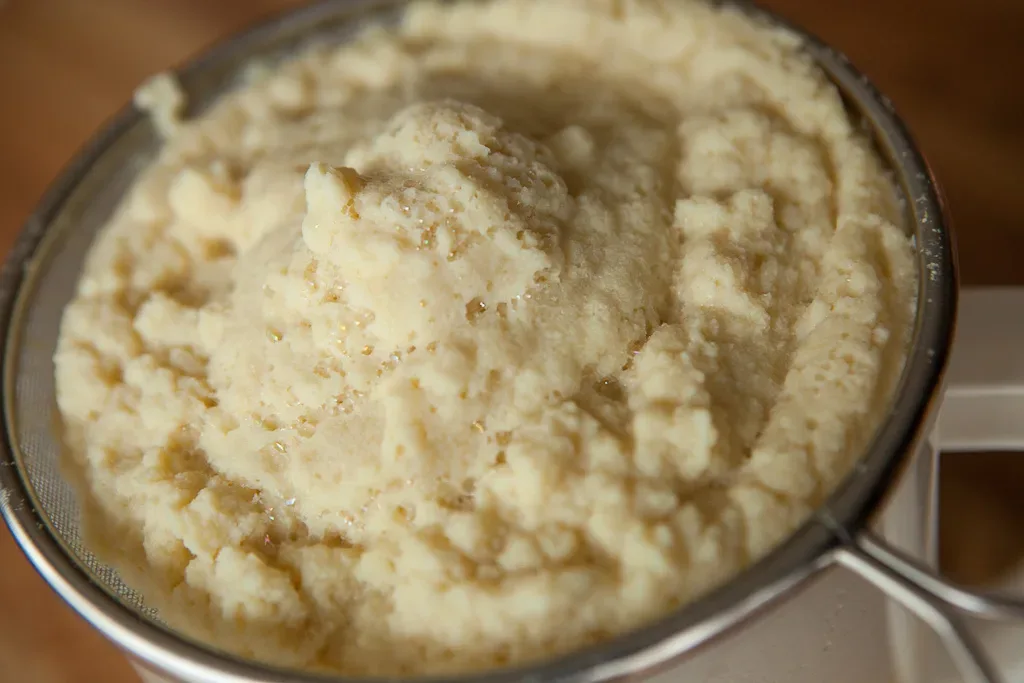 Fresh okara being strained from soy milk. Photo: Wikimedia Commons
.jpg)
Like BSG, fresh okara is about 70–80% water, but on a dry basis it contains around 25–30% protein and 40–60% dietary fiber. About 1.1 kg of okara can be produced for every 1 kg of soymilk or tofu, with global production estimated at about 14 million tonnes per year. Soy okara alone may contain roughly 40–70 million annual 50-gram Daily Value equivalents.345
These residues vary depending on the crop. Soy okara is different from oat residue, almond pulp, pea residue, or rice residue, because each has its own proteins, carbohydrates, flavors, textures, and processing behavior.311
How We Are Experimenting with Upcycling These Products
One promising direction is transforming these byproducts into umami-rich ingredients like shoyu and miso. Through fermentation with koji, these byproducts can be transformed into savory products without the need for highly intensive processing. In fact, since they are high in protein without being especially high in fat, they can be promising substrates for these kinds of fermentation: less residual fat gives koji lipases less material to act on, reducing one route to rancid flavors.1718 This makes fermentation especially useful for materials such as canola presscake, BSG, and okara, because it can transform bland, bitter, or fibrous side-streams into savory condiments. For miso-style products, minimal physical processing may still be useful. For example, wet grinding can reduce graininess and create a smoother texture. As examples, see Canola Presscake Garum and (ONG) Sunflower Presscake Miso.
A second direction is solid-state fermentation. Examples include koji, tempeh-style fermentation, oncom-style fermentation, and basidiomycete fermentation. These methods are promising because they can act directly on moist substrates, generate important umami compounds and precursors such as free amino acids, and can significantly improve texture by binding otherwise fibrous particles together, modifying the structure of fibers, and creating meaty textures.1719 This makes solid-state fermentation especially relevant for turning these byproducts into meat alternatives or savory bases rather than simply extracting protein from them.
A third direction is enzymatic processing or fermentation for protein and fiber flavor upcycling. Instead of trying to hide the flavors of these byproducts, enzymes can be used to create roasted, savory, nutty, malty, cocoa-like, or coffee-like notes, similar to those flavors created through proteolysis and other biochemical changes during the fermentation of cacao and coffee. This is especially relevant for chocolate and coffee alternatives, where the goal is primarily flavor rather than nutrition. Enzymatic and fermentative processing can release amino acids, sugars, peptides, and aroma precursors that later contribute to browning, roasted flavors, and complex aroma development.2021 For some of our early work in this direction, see Chocolate Substitutes.
Bibliography
Footnotes
-
USDA Foreign Agricultural Service. Oilseeds: World Markets and Trade. July 2026. https://apps.fas.usda.gov/psdonline/circulars/oilseeds.pdf ↩ ↩2
-
Dancker, P., Glas, K., and Gastl, M. “Potential Utilisation Methods for Brewer’s Spent Grain: A Review.” International Journal of Food Science & Technology, vol. 60, no. 1, 2025, article vvae022. https://academic.oup.com/ijfst/article/60/1/vvae022/7943327 ↩ ↩2 ↩3
-
Rohrer, K., Whitfield, F., Aussanasuwannakul, A., Ningrum, A., Hugi, C., and Breitenmoser, L. “Comparative Screening Life Cycle Assessments of Okara Valorisation Scenarios.” Environments, vol. 12, no. 3, 2025, article 93. https://www.mdpi.com/2076-3298/12/3/93 ↩ ↩2 ↩3 ↩4
-
Author calculation from cited production and composition figures. BSG protein estimate: 37.8 Mt wet BSG × 20–30% dry matter × 20–22% protein ≈ 1.5–2.5 Mt crude protein/year. Rapeseed/sunflower estimate: 53.46 Mt rapeseed meal × 42.8% crude protein + 24.85 Mt sunflower meal × 35.6% crude protein ≈ 31.7 Mt crude protein/year. Soy okara estimate: 14 Mt wet okara × 20–30% dry matter × 25–30% protein ≈ 0.7–1.3 Mt protein/year. Total ≈ 34–35.5 Mt crude protein/year. These are rough estimates because composition varies by cultivar and process. ↩ ↩2 ↩3
-
U.S. Food and Drug Administration. 21 CFR §101.9(c)(7)(iii). Protein Daily Value: 50 g for adults and children 4 years and older. https://www.law.cornell.edu/cfr/text/21/101.9 ↩ ↩2 ↩3
-
Author comparison assuming soybean meal at 47.5% crude protein: 34–35.5 Mt protein ÷ 0.475 × $296.15939 per metric tonne ≈ $21.2–22.1 billion. Price source: Federal Reserve Bank of St. Louis / International Monetary Fund. “Global Price of Soybean Meal.” FRED series PSMEAUSDM, June 2026. https://fred.stlouisfed.org/series/PSMEAUSDM/ ↩
-
Illustrative author comparison assuming poultry is 21% protein: 34–35.5 Mt protein ÷ 0.21, valued at 167.12391 U.S. cents per pound, gives a gross commodity equivalent of about $596–623 billion. Price source: Federal Reserve Bank of St. Louis / International Monetary Fund. “Global Price of Poultry.” FRED series PPOULTUSDM, June 2026. https://fred.stlouisfed.org/series/PPOULTUSDM ↩
-
Illustrative author comparison assuming beef is 18.5% protein: 34–35.5 Mt protein ÷ 0.185, valued at 341.60227 U.S. cents per pound, gives a gross commodity equivalent of about $1.38–1.44 trillion. Price source: Federal Reserve Bank of St. Louis / International Monetary Fund. “Global Price of Beef.” FRED series PBEEFUSDM, June 2026. https://fred.stlouisfed.org/series/PBEEFUSDM ↩
-
Roy, P., and Mohanty, A. K. “A Review on the Challenges and Choices for Food Waste Valorization: Environmental and Economic Impacts.” ACS Environmental Au, vol. 3, no. 2, 2023, pp. 58–75. DOI: 10.1021/acsenvironau.2c00050. https://pmc.ncbi.nlm.nih.gov/articles/PMC10021016/ ↩
-
U.S. Environmental Protection Agency. From Field to Bin: The Environmental Impacts of U.S. Food Waste Management Pathways. https://www.epa.gov/land-research/field-bin-environmental-impacts-us-food-waste-management-pathways ↩
-
Piercy, E., Verstraete, W., Ellis, P. R., Banks, M., Rockström, J., Smith, P., Witard, O. C., Hallett, J., Hogstrand, C., Knott, G., Karwati, A., Rasoarahona, H. F., Leslie, A., He, Y., and Guo, M. “A Sustainable Waste-to-Protein System to Maximise Waste Resource Utilisation for Developing Food- and Feed-Grade Protein Solutions.” Green Chemistry, vol. 25, 2023, pp. 808–832. DOI: 10.1039/D2GC03095K. https://pubs.rsc.org/en/content/articlehtml/2023/gc/d2gc03095k ↩ ↩2 ↩3
-
Grand View Research. “Protein Ingredients Market Size, Share & Trends Analysis Report.” https://www.grandviewresearch.com/industry-analysis/protein-ingredients-market ↩
-
Fortune Business Insights. “Protein Ingredients Market Size, Share & Industry Analysis, 2026–2034.” https://www.fortunebusinessinsights.com/protein-ingredients-market-115863 ↩
-
Terefe, G. “Preservation Techniques and Their Effect on Nutritional Values and Microbial Population of Brewer’s Spent Grain: A Review.” CABI Agriculture and Bioscience, vol. 3, 2022, article 51. https://link.springer.com/article/10.1186/s43170-022-00120-8 ↩
-
Vichare, S. A., and Morya, S. M. “Exploring Waste Utilization Potential: Nutritional, Functional and Medicinal Properties of Oilseed Cakes.” Frontiers in Food Science and Technology, vol. 4, 2024, article 1441029. https://www.frontiersin.org/journals/food-science-and-technology/articles/10.3389/frfst.2024.1441029/full ↩ ↩2 ↩3
-
Tan, S. H., Mailer, R. J., Blanchard, C. L., and Agboola, S. O. “Canola Proteins for Human Consumption: Extraction, Profile, and Functional Properties.” Journal of Food Science, vol. 76, no. 1, 2011, pp. R16–R28. DOI: 10.1111/j.1750-3841.2010.01930.x. https://ift.onlinelibrary.wiley.com/doi/10.1111/j.1750-3841.2010.01930.x ↩
-
Kitamoto, K. “Molecular Biology of the Koji Molds.” Advances in Applied Microbiology, vol. 51, 2002, pp. 129–153. DOI: 10.1016/S0065-2164(02)51004-2. ↩ ↩2
-
Chintagavongse, Napaporn, Haruto Kumura, Toru Hayakawa, Jun-Ichi Wakamatsu, and Koichi Tamano. “Identification of Cheese Rancidity-Related Lipases in Aspergillus oryzae AHU 7139.” Journal of Bioscience and Bioengineering, vol. 137, no. 5, 2024, pp. 381–387. DOI: 10.1016/j.jbiosc.2024.01.016. https://pubmed.ncbi.nlm.nih.gov/38429186/ ↩
-
Nout, M. J. R., and Kiers, J. L. “Tempe Fermentation, Innovation and Functionality: Update into the Third Millennium.” Journal of Applied Microbiology, vol. 98, no. 4, 2005, pp. 789–805. DOI: 10.1111/j.1365-2672.2004.02471.x. ↩
-
Fang, Yiming, Rui Li, Zhong Chu, Kexue Zhu, Fenglin Gu, and Yanjun Zhang. “Chemical and Flavor Profile Changes of Cocoa Beans (Theobroma cacao L.) during Primary Fermentation.” Food Science & Nutrition, vol. 8, no. 8, 2020, pp. 4121–4133. DOI: 10.1002/fsn3.1701. https://pmc.ncbi.nlm.nih.gov/articles/PMC7455942/ ↩
-
Wang, Chenhui, Jingcan Sun, Benjamin Lassabliere, Bin Yu, Feifei Zhao, Fangju Zhao, Ying Chen, and Shao Quan Liu. “Potential of Lactic Acid Bacteria to Modulate Coffee Volatiles and Effect of Glucose Supplementation: Fermentation of Green Coffee Beans and Impact of Coffee Roasting.” Journal of the Science of Food and Agriculture, vol. 99, no. 1, 2019, pp. 409–420. DOI: 10.1002/jsfa.9202. https://pubmed.ncbi.nlm.nih.gov/29896755/ ↩