
Background
This experiment is part of a general exploration into utilizing press cakes and agricultural byproducts. The goal is to produce a garum by leveraging the residual protein left in these press cakes to create an umami-rich sauce. This project compares two variations: one made with roasted canola press cake and one with unroasted.
Recipe
Ingredients
Equal parts Canola Press Cake (one batch roasted, one unroasted)
Equal parts Pearled Wheat Koji
8% Salt (by total weight)
Equipment
Glass Jar
Fermentation Chamber (set to 140°F / 60°C)
Scale
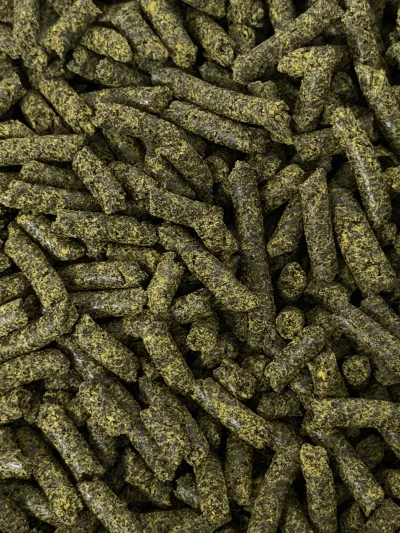 The unfermented presscakes.
Instructions
-
Preparation
For the roasted batch, roast the canola press cake before mixing. Leave the press cake unroasted for the second batch. -
Mixing
Combine equal parts of the canola press cake and pearled wheat koji. -
Salting
Weigh the mixture and add 8% salt by weight, mixing thoroughly to distribute. -
Incubation
Place the mixture into jars and hold in a fermentation chamber at 140°F (60°C). -
Aging and Clarification
Allow the enzymatic breakdown to occur over the course of several weeks to a month, then clarify the resulting liquid.
Notes and Observations
- The theory behind this experiment is that significant protein remains in the press cakes, which can be converted into amino acids (umami) via the enzymes in the koji.
- Running two parallel batches (roasted vs. unroasted canola press cake) will help determine how roasting affects the depth of flavor and color of the final garum.
- The high incubation temperature of 140°F (60°C) keeps the mixture safe from unwanted microbial activity while allowing the koji enzymes to actively break down the proteins.
- Once the aging period is complete, the mixture will be strained and clarified to evaluate the yield and flavor profile.