
Background
Tea, strictly speaking, is the camellia sinensis plant. All types of tea (grean tea, white tea, oolong, black tea, and fermented dark teas like pu’er), begin with the same plant. Besides varying cultivars, their differences come purely from treatment: growing conditions, harvesting techniques, and processing. Tisanes, or ‘herbal teas’, are a much broader group of drinks made by infusing practically anything else: leaves, flowers, fruits, roots bark, seeds, grains, fungi, seaweeds, and more.1
In the Northeast US, tea cultivation is limited to practically non-existant, with the exception of some individual attempts. The techniques of tea oxidation, fermentation, drying, roasting, smoking, and brewing, however, can offer a foundation for the development of satisyfing herbal teas of the Northeast.
Of course, there are many historical reference points for herbal teas, including in the Northeast. New Jersey tea (Ceanothus americanus) was used in place of imported tea during the American Revolution.2 Other leaves and flowers used for herbal teas include fireweed, red raspberry leaf, nettle, bee balm, anise hyssop, lemon balm, mint, chamomile, linden, lilac, violet, and pineapple weed. Fruit, berry, and sour-plant preparations include staghorn sumac, cranberry, sour cherry, apple, rose hip, and rhubarb. One plant, yaupon holly, even has its own caffeine, the only such native North American plant.
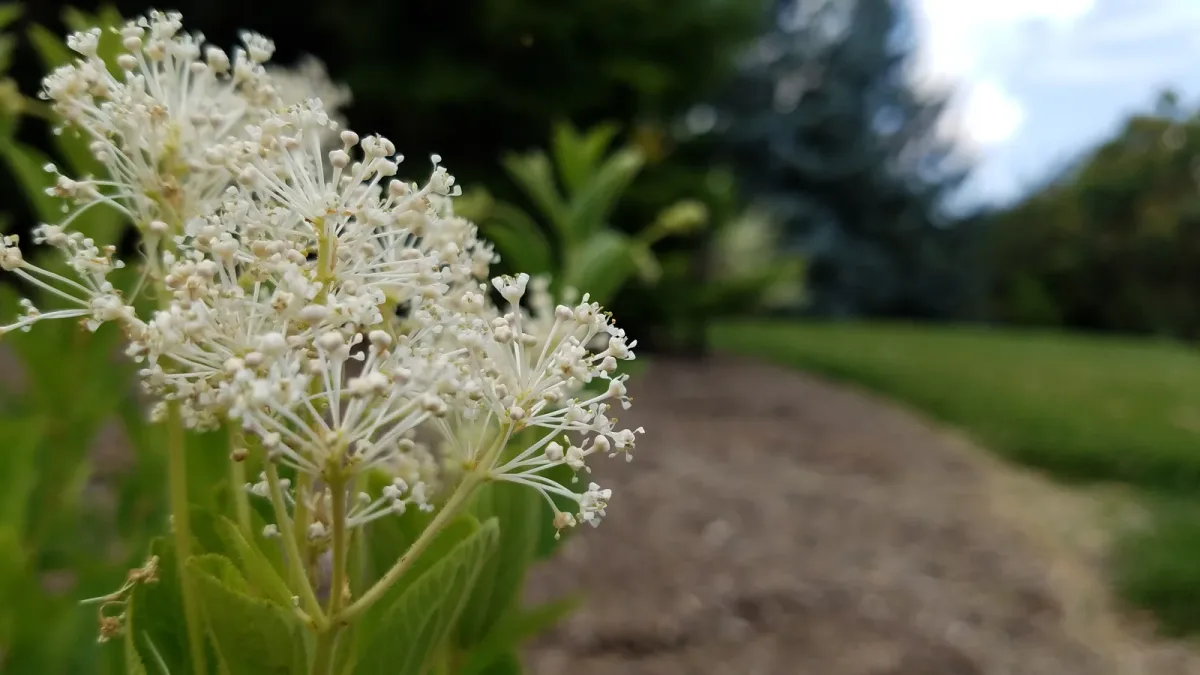 Flowering New Jersey tea, a native shrub whose leaves were historically used as a tea substitute. Photo: Wikimedia Commons
.jpg)
Other preparations draw from aromatic seeds, berries, twigs, bark, and needles, including spicebush, caraway, spruce, and pine. Roasted grain and root teas include rye, barley, buckwheat, corn, oat, sorghum, dandelion root, and burdock root. Fungi form another category of infusions. Maple syrup, honey, fruit reductions, amazake, and malted-grain syrups are possible Northeastern additions to any of these preparations.
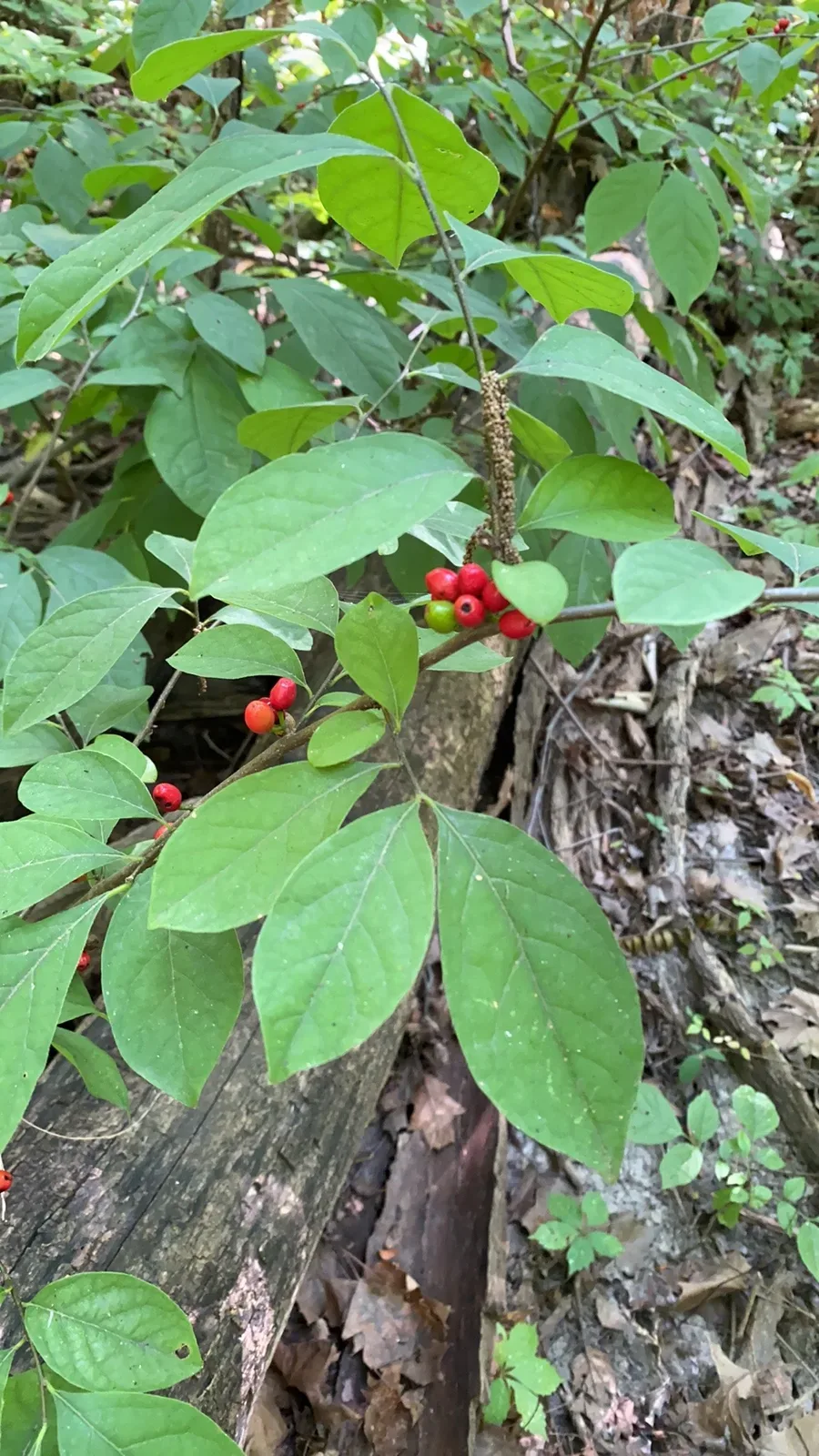 Native spicebush with ripe berries, one of several aromatic Northeastern plants suited to infusion. Photo: Wikimedia Commons
_branch_with_berries.jpg)
Byproducts may also be germaine for herbal teas. Fruit skins and pomace, raspberry leaves, strawberry tops, herb stems, spent grain, corn silk, and grain screenings all have flavor even after their primary product has been processed or harvested. Because the solids are strained out in herbal teas, an infusion can sometimes make use of fibrous materials that would be unpleasant to eat.
All this in mind, the goal is to contribute to a developing cupboard of Northeastern teas and orbiting techniques.
Processing
The key reaction in black tea processing is oxidation. Oxidation is a primarily enzymatic process. The intact tea leaf is bruised, which causes contact between phenolic compounds and oxidative enzymes (such as polyphenol oxidase). These enzymes convert these phenolic compounds into quinones, which react with one another and other leaf compounds to form theaflavins. Theaflavins contribute to the darker color of the tea as well as the taste, and diminish the bitter phenolic compounds which would otherwise be extracted from tea brewing. A number of other enzymes react with compounds in the leaf as well as the surrounding oxygen to form volatile aromatic compounds with notes of fruitiness. Heating the tea leaf will denature the enzymes and halt these reactions (or prevent them entirely, though it also can affect flavor).
For green tea, these reactions are avoided, which impacts the flavor but also informs the brewing process. Longer and hotter steeps draw out more of these bitter compounds, and so gentler techniques must be used for green teas (in contrast with black teas) to prevent over-extraction.
Beyond being composed of different plant material, herbal teas (leafs, shoots, grains, and so on) contain different endogenous enzymes which affect the viability of oxidation as a flavor-forming technique. Fireweed, raspberry, nettle, and Camellia sinensis will therefore develop quite differently than traditional tea, though these techniques can often still be effectual, depending on such compounds and enzymes (for example, Nordic Food Lab found that rolled and oxidized fireweed developed fruitier, more tea-like aromas).3
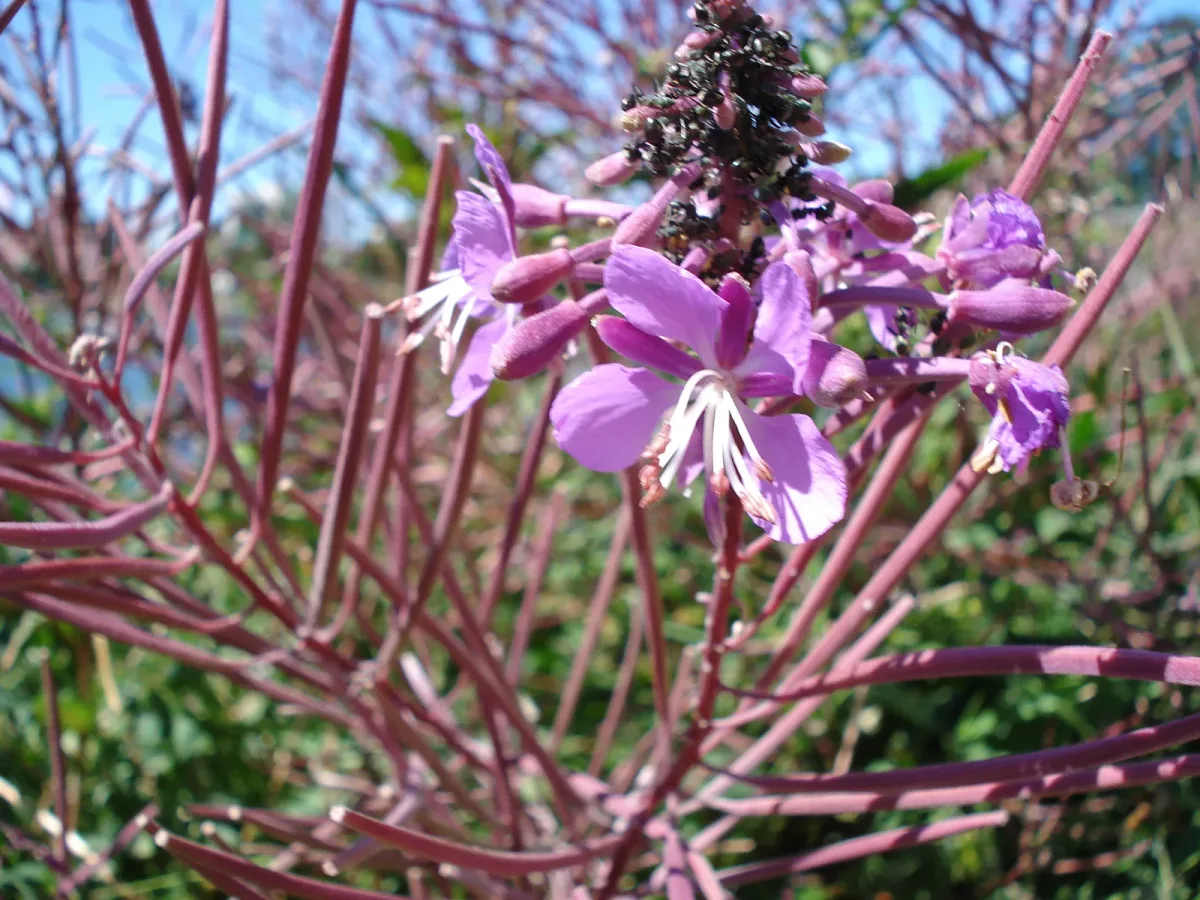 Fireweed in flower near Thunder Bay, Ontario. Photo: Ryan Hodnett, Wikimedia Commons (CC BY-SA 4.0)
_-_Thunder_Bay,_Ontario_01.jpg)
Roasting can also contribute to complexity, especially for grains, roots, and seeds. Our existing grain tea and rye tea trials show the range from sweet and cereal-like to bitter, smoky, and burnt. Different reactions like the Maillard reaction contribute to flavor development as they do during many cooking processes.
Microbial fermentation is a distinct method. Here, enzymes are introduced from the microbes as they metabolize the the substrate. Some teas are fermented with bacteria and mold during this bruising process by happenstance, while others are intentionally fermented for flavor-development, such as pu’er (the Nordic Food Lab has also experimented with pu’er-like fungal fermentation using aspergillus strains on non-tea substrates).
Brewing and Infusion
Tea is extracted by brewing, which can be done both hot and cold and is subject to various pressures: ratio of substrate to brewing liquid, temperature, time, particle size, agitation, mineral content of water, and more. Hotter water extracts faster, but may also boil off more volatile aromatics; as such, it is easier to overextract if hot brewing.4
Delicate leaves and flowers can be infused below boiling; roots, bark, seeds, and grains can be simmered as a decoction. For consistent first comparisons, leaves and flowers can begin at 10 grams per liter for five minutes at 90°C. Dense or roasted materials can begin at 20 grams per liter with a fifteen-minute simmer, and cold infusions at 10 grams per liter for eight to twelve hours under refrigeration. These processes will serve as our reference points for brews that can later be refined and whose ratios can be altered.
Water, because it can have a large impact on the extraction and final flavor, should remain the same between our trials. Cornell researchers found that its mineral composition changed tea’s extraction, color, turbidity, and perceived flavor.5 Vinegar, alcohol, and fat molecules capture different ranges of aromatic compounds and can extend the work once the basic water infusion is understood.6
If you have corrections, comments, or additions to the above information, please send us a note at info@northeastlarder.com.
Bibliography
Footnotes
-
Willson, K. C., and M. N. Clifford, editors. Tea: Cultivation to Consumption. Chapman & Hall, 1992. Especially T. Takeo, “Green and Semi-Fermented Teas,” pp. 413–457; M. G. Hampton, “Production of Black Tea,” pp. 459–511; M. Gill, “Speciality and Herbal Teas,” pp. 513–534; and A. Robertson, “The Chemistry and Biochemistry of Black Tea Production—The Non-Volatiles,” pp. 555–601. DOI: 10.1007/978-94-011-2326-6. ↩
-
Coladonato, Milo. “Ceanothus americanus, New Jersey Tea.” U.S. Department of Agriculture, Forest Service, Fire Effects Information System, 1993. https://research.fs.usda.gov/feis/species-reviews/ceaame. The historical-use statement is also discussed by Smithsonian Gardens in “A Tempest in a Teapot: Alternative Plants to Traditional Tea,” 2021: https://gardens.si.edu/learn/blog/a-tempest-in-a-teapot-alternative-plants-to-traditional-tea/ ↩
-
Danielsen, Justine de Valicourt. “Tea, But Not.” Nordic Food Lab, March 23, 2016. https://nordicfoodlab.org/blog/2016/03/tea-but-not/. This is a primary account of exploratory kitchen trials. Technical processing and safety information is drawn from the academic and institutional sources cited separately. ↩
-
Castiglioni, Sara, Elisabetta Damiani, Paola Astolfi, and Patricia Carloni. “Influence of Steeping Conditions (Time, Temperature, and Particle Size) on Antioxidant Properties and Sensory Attributes of Some White and Green Teas.” International Journal of Food Sciences and Nutrition, vol. 66, no. 5, 2015, pp. 491–497. DOI: 10.3109/09637486.2015.1042842. https://pubmed.ncbi.nlm.nih.gov/26017324/ ↩
-
Franks, Melanie, Peter Lawrence, Alireza Abbaspourrad, and Robin Dando. “The Influence of Water Composition on Flavor and Nutrient Extraction in Green and Black Tea.” Nutrients, vol. 11, no. 1, 2019, article 80. DOI: 10.3390/nu11010080. https://pmc.ncbi.nlm.nih.gov/articles/PMC6356489/ ↩
-
McGee, Harold. On Food and Cooking: The Science and Lore of the Kitchen. Revised ed., Scribner, 2004, pp. 413, 416. For a book-length introduction to tea chemistry and brewing, see Michelle Francl, Steeped: The Chemistry of Tea, Royal Society of Chemistry, 2024, DOI: 10.1039/9781837670383. For history, see Victor H. Mair and Erling Hoh, The True History of Tea, Thames & Hudson, 2009. ↩