
Background
The goal of this experiment is to evaluate various grains, preprocessing methods, and roasting profiles for developing a grain-based tea (Genmaicha-style and standalone grain infusions).
The trial is split into two parts:
- An initial broad screening of various roasted, puffed, and raw grains.
- A targeted roasting and brewing matrix using Rye to evaluate temperature, time, and extraction methods (cold brew vs. hot brew).
Process
Ingredients
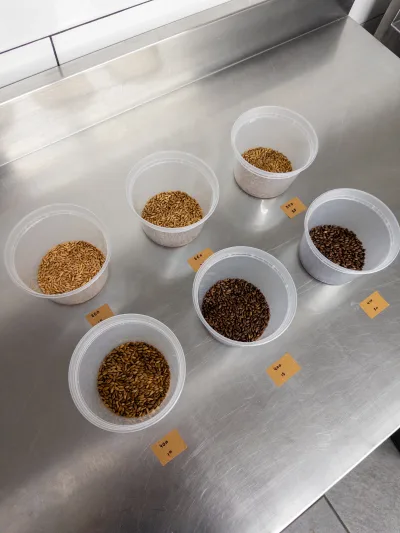
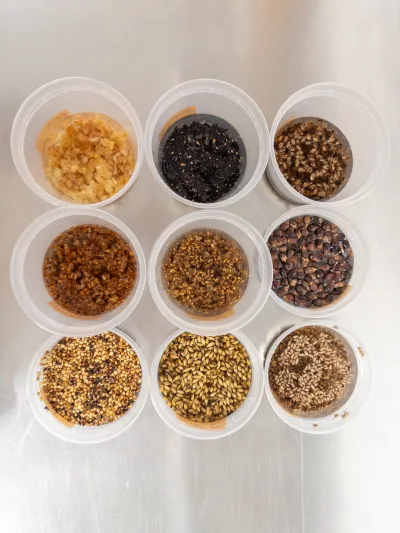
For the initial screening, the following grains and preparations were tested:
- Puffed rice
- Puffed and extruded wheat
- Puffed wheat
- Dry toasted wheat
- Black rice
- Bloody Butcher corn
- Field corn
- Sorghum
- Flaked oat
- Light malt (diastatic and unroasted malt)
Rye Tea Roasting Matrix
To test variables on a known baseline, Rye was roasted at two temperatures across multiple durations:
- 350°F: 15 minutes / 25 minutes / 35 minutes
- 400°F: 10 minutes / 15 minutes / 20 minutes
Brewing Methods
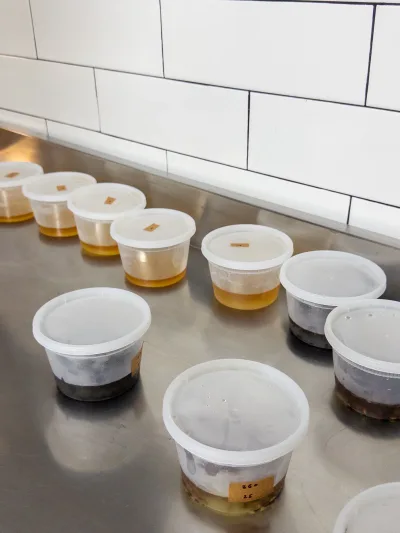
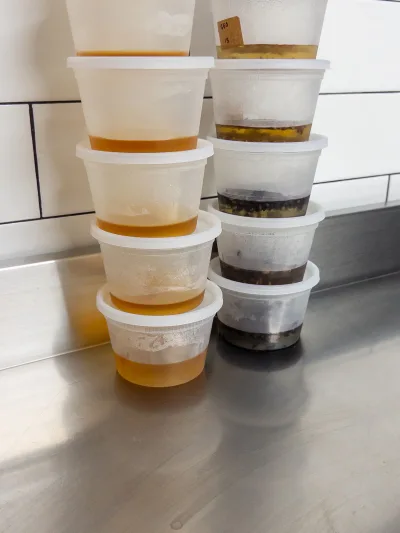
- Cold Brew: 20g of roasted grain to 100g of water. Steeped cold.
- Hot Brew (Boiling Test): 20g of roasted grain to 100g of water. Boiled for 10 minutes, grains strained, then cooled in the fridge before tasting.
Notes and Observations
Part 1: Initial Grain Screening (Cold Brewed)
- Toasted Rice: Light, subtle, very pale liquid. Tastes pleasantly of slightly burnt rice. Would pair well with stone fruit. Potential: 7/10. It is currently too light; taking the roast darker could improve it. This would make an excellent base for a Kombucha where acidity, carbonation, and a little funk/floral character can balance the grain.
- Sorghum: Rich and savory. Reminiscent of barley tea but rounder, less grainy, and with more character. It does not taste like a typical roasted grain. Best served cold; warm sorghum tea was less appealing.
- Roasted Light Malt (Diastatic): Amber, maple-sap color. Bitter and malty, leaning into a tea-like bitterness with a balance of sweetness and saltiness. Very interesting. Could work well in a green tea blend.
- Roasted Oat: Similar to barley tea but worse—more bitter. Might need honey to balance.
- Roasted Corn: Smells like popcorn kernels in urine. Minor bitterness on the finish, but very little corn flavor. Raw kernels do not yield enough flavor from the outside; the grain needs to be cooked or puffed first.
- Roasted Wheat: Interesting, slightly herbal flavor on the back end. Not amazing, but there is potential.
- Puffed Rice: Sweeter, classic Genmaicha profile. However, a strange, plastic-like off-flavor was detected in one sample.
- Next Animal (Extruded/Puffed Wheat variant): Unappealing raw flour dough aroma with a slightly crab-like, fishy smell. Not a fan.
Screening Takeaways
Dry roasting whole grains is the most compelling direction. It is highly shelf-stable, low-labor, and yields clean, blendable flavors. Whole grains are preferred over cracked grains to keep the brew clear.
Part 2: Rye Tea Roasting & Brewing Trial
The more darkly roasted rye samples developed a distinct coffee-like aroma. Higher roasting temperatures (400°F) produced a much less even roast than the lower temperature (350°F).
350°F Roast Trials
- 15 Minutes: Smells like popcorn and caramel. Light, pleasant, iced-tea character. Lacks harsh, acrid notes but is a bit pale and simple.
- 25 Minutes: Darker, roasty nose reminiscent of barley tea with a hint of burnt popcorn kernel. Flatter and less interesting than the 15-minute roast.
- 35 Minutes: Dark and burnt on the nose, but rounder and sweeter than the 25-minute roast. Still too burnt overall.
400°F Roast Trials
- 10 Minutes: Burnt popcorn smell. Full-bodied but loses the charm of rye tea. Too burnt.
- 15 Minutes: Deeply burnt flavors, but in a pleasant way—reminiscent of roasted marshmallow and charcoal.
- 20 Minutes: Over-extracted. Yields a flat, “burnt water” taste.
Extraction: Cold Brew vs. Hot Brew
- Cold Brew: Generally preferred for clean flavor extraction, though it yields almost no aroma on the nose.
- Hot Brew: Tastes much more like buttered grain crackers and Werther’s Original caramel. It is sweeter and more neutral on the palate, but lacks the complexity of the cold brew.
Trial 3: Six-Grain Roasting & Cold Brew Matrix
A new trial was conducted to evaluate six specific grains under standardized roasting and cold-steeping conditions.
Ingredients
Process
- Roasting (Hulled Grains): Sorghum, rye, black rice, sweet white rice, and brown rice were dry-roasted at 350°F for 20 minutes in a high-power convection oven. (Note: Roasting times may vary depending on the oven; convection runs faster).
- Roasting (Pearled Grains): Pearled farro roasts much faster due to the lack of hulls. It was dry-roasted at 350°F for 10 minutes.
- Brewing: All roasted grains were cold-steeped overnight.
Future Adjustments
- Roast Optimization: Lower temperatures for longer durations yield a much more even roast and superior flavor. Future trials should test 300°F for longer periods, as well as a 350°F roast targeted specifically between 15 and 20 minutes.
- Hybrid Brewing: Test a hot brew, cold steep method. This may extract the desirable butterscotch and caramel notes of the hot brew while maintaining the extraction efficiency and clarity of the cold brew.
- Grain Tea Taste Test: Set up a sensory panel with up to 100 grain tea variations. Use note cards for feedback to gauge how these profiles appeal to the average palate.
Photos
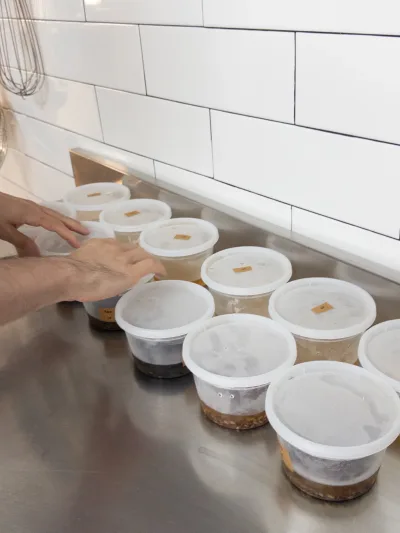
New Trial:
mugwort, spicebush, spicebush leaves
spicebush rye great spicebush mugworth great black rice great
all sweetened with apple cider syrup
for the plain rye, darker toast perhaps
sorghum tea has a bit of a must, not necessarily bad