
The Importance of Chocolate
Chocolate doesn’t grow in the Northeast — nor most of the world — but it is ingrained in the food cultures of many of these regions nevertheless.
Cocoa is only grown along a narrow tropical band and is subject to volatile weather conditions which have worsened in recent years due to climate change. Its production process is long, oftentimes taking a few weeks or longer. To farm it, land must be cleared, which is often rainforest land. For all of these reasons and more, chocolate is relatively expensive to produce and reliant upon complex supply chains. The volatility of this supply chain has resulted in a number of cocoa shortages, such as the recent cacao crisis. In short, if a product that replicates the sensory properties of chocolate were created using cost-effective, widely available ingredients, such as grains, this would be an important advancement in a market worth almost $200 billion.
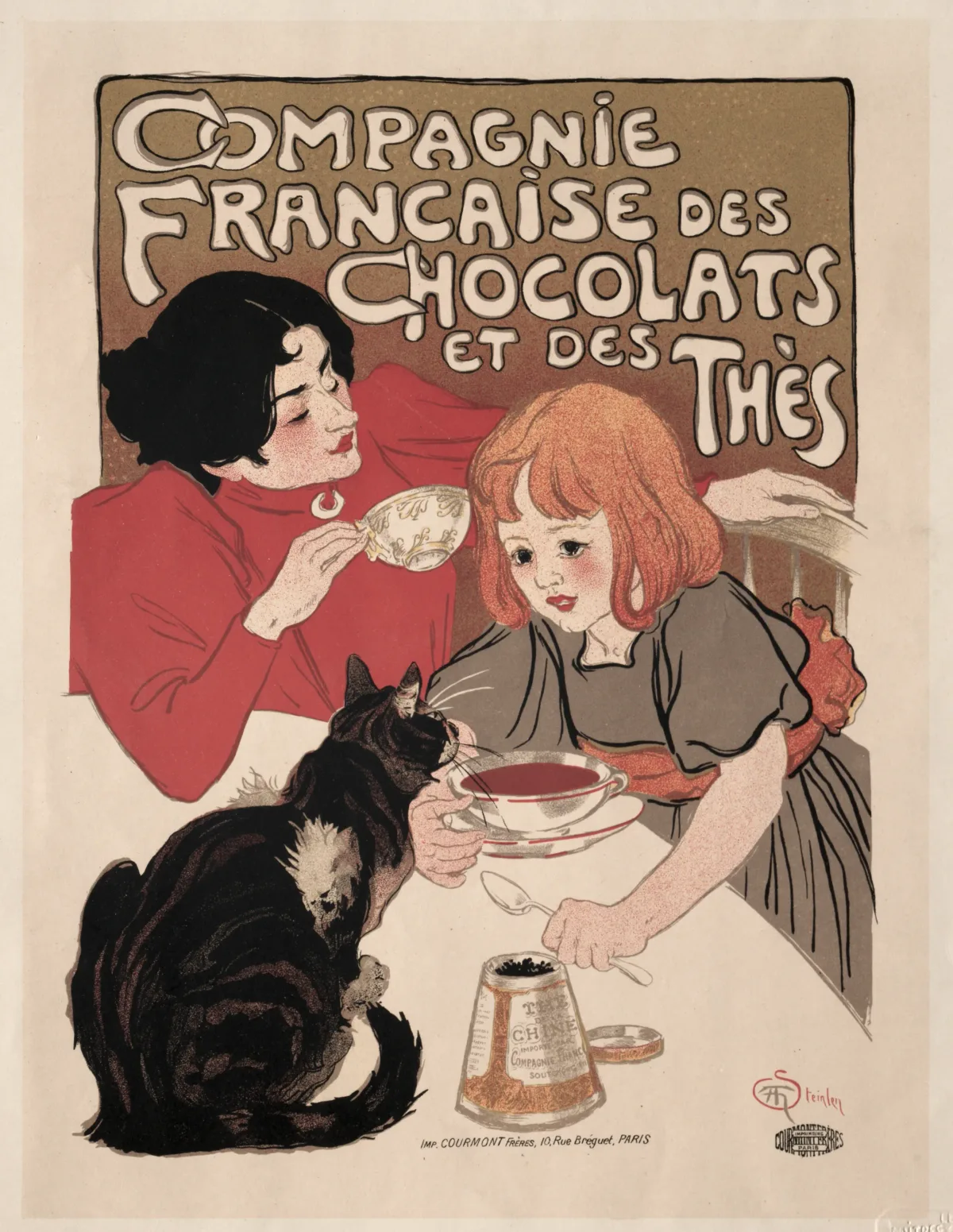 Chocolate and tea advertisement by Théophile-Alexandre Steinlen, 1895. Image: Bibliothèque nationale de France via Wikimedia Commons (public domain).

The Taste of Chocolate
The transformation in taste from raw cocoa bean to chocolate owes to its fermentation — a complex process involving bacteria, mold, and yeast — which, through enzymatic breakdown, create the precursors for chocolate flavor. When roasted, these precursors develop into the flavor we know as chocolate.1 So, is there a way to replicate these precursors to create a product that is sensorily very similar to chocolate when roasted? Likewise, can this process — which creates such a variety of compelling flavors as only a single species (theobroma cacao) — be utilized to create novel flavors using substrates other than cacao? If extended to agricultural products that grow in abundance or byproducts, can we develop the same richness and depth of flavor?
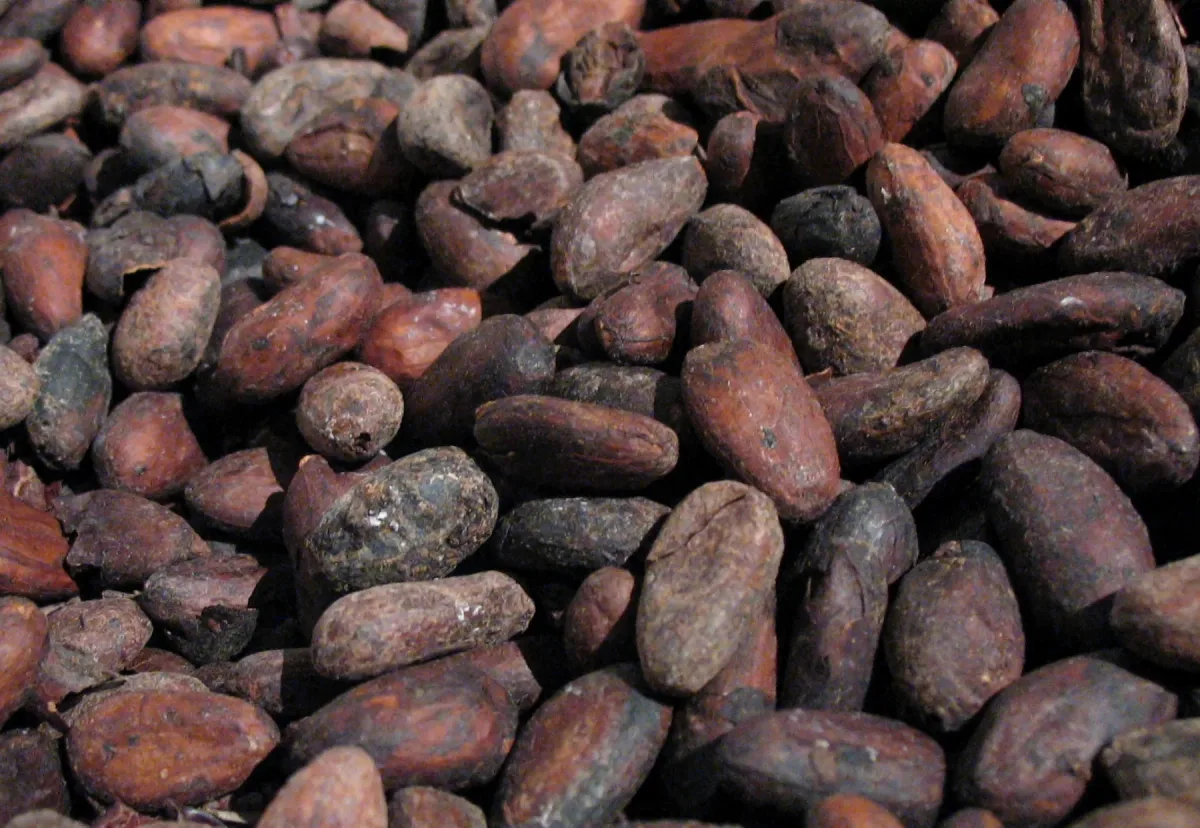 Roasted cacao beans, where fermentation-derived precursors become familiar chocolate aromas. Photo: SuperManu and Una Smith, Wikimedia Commons (CC BY-SA 3.0; cropped and resized).

This is what we are exploring. It is possible a convincing substitute may be a blend of several crops, each playing a particular role, rather than one seed.2
Chocolate Fermentation
Fermentation outside of the seed is the foundation of chocolate flavor inside the seed. Yeast, lactic acid bacteria, and acetic acid bacteria first digest the fruit around the bean. In doing so, they release enzymes which further aid in the breakdown of the bean and the formation of flavor. Alcohol, acid, and heat produced as a byproduct of this fermentation kills the seed. The bean’s own enzymes can then act on storage proteins and sucrose within the seed, forming a unique mixture of peptides, free amino acids, and sugars. These are the precursors of chocolate flavor.3
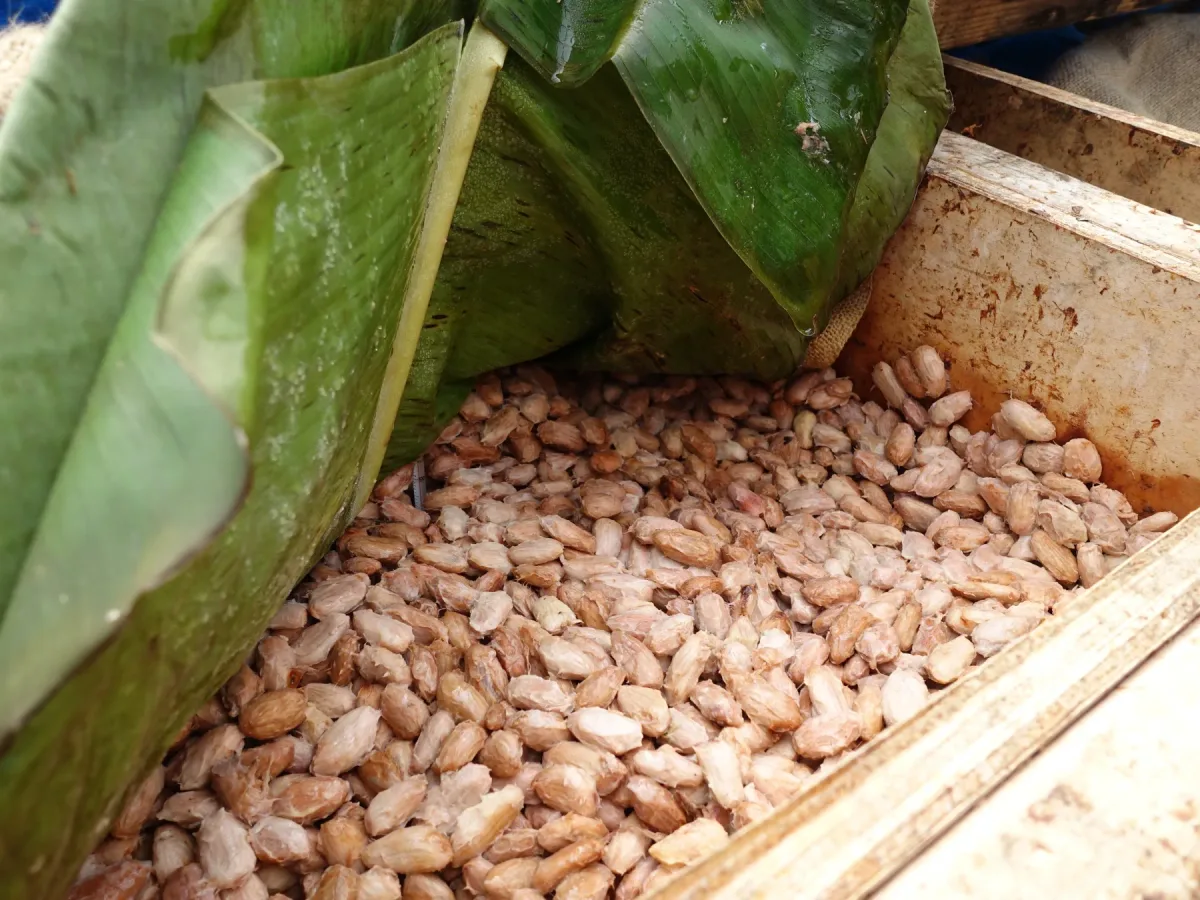 Cacao seeds fermenting under banana leaves in a wooden box, with a thermometer embedded in the mass. Photo: Scot Nelson, Wikimedia Commons (CC0; resized).

During roasting, these flavor precursors undergo Maillard and Strecker reactions and form aldehydes, pyrazines, and other compounds associated with the flavor of chocolate, of course, in addition to malt, nuts, flowers and fruit.4 So, it is fermentation and the resulting acids, alcohols, and enzymes produced which — when reacting with a specific set of storage proteins and sugars — create the flavor of chocolate.
Replicating Chocolate Fermentation
So, the primary components of recreating a chocolate-like fermentation are:
- A protein and peptide base. This could be a legume, like fava beans, soybeans, black beans, peas, or a grain like oats, barley, rye, or wheat. It can also be a protein-rich byproduct like sunflower presscake, oat milk lees, or okara. In theory, the closer the matches between the proteins and their constituents of these substrates to the cacao bean, the closer the final product should replicate the taste of chocolate, barring other — oftentimes important — factors. Fava is particularly interesting because it contains a large amount of globulins including vicilin 7S proteins, similar to cacao.5
- A small amount of carbohydrates. Most of these substrates will already contain small amounts of carbohydrates that can be broken down into simpler sugars as a precursor for Maillard reactions during roasting. For substrates that are lacking, additional carbohydrates can be added using grains like barley, rye, wheat, spelt, buckwheat, and sorghum, or byproducts such as stale bread. Complex carbohydrates like inulin have proven to be able to break down into chocolate-like flavors (cf. Black Sunchoke); ingredients high in inulin include sunchoke, dandelion root, and chicory.
- (optionally) Pre-Roast Fat. Not to be conflated with the saturated cacao butter-like fat, which can be added during the conching process after the roasting,6 some degradation of fats during roasting can contribute to chocolate flavor. Ingredients like sunflower seeds are rich in chlorogenic acids (which are shared with coffee) and also provide some phenols that may contribute to chocolate-like flavor.7
- (optionally) Aromatic Fermentation. A yeast or mixed yeast/LAB/AAB fermentation after partial saccharification could contribute to the creation of fruity esters and alcohols which form the foundation of some of the flavor of cocoa.
- Enzymatic Breakdown. Enzymatic breakdown — especially of proteins — is necessary to form the amino acid and peptide precursors for chocolate-like flavor. Fungal enzymes can be used here for a balanced profile of many different enzymes, including proteases.8
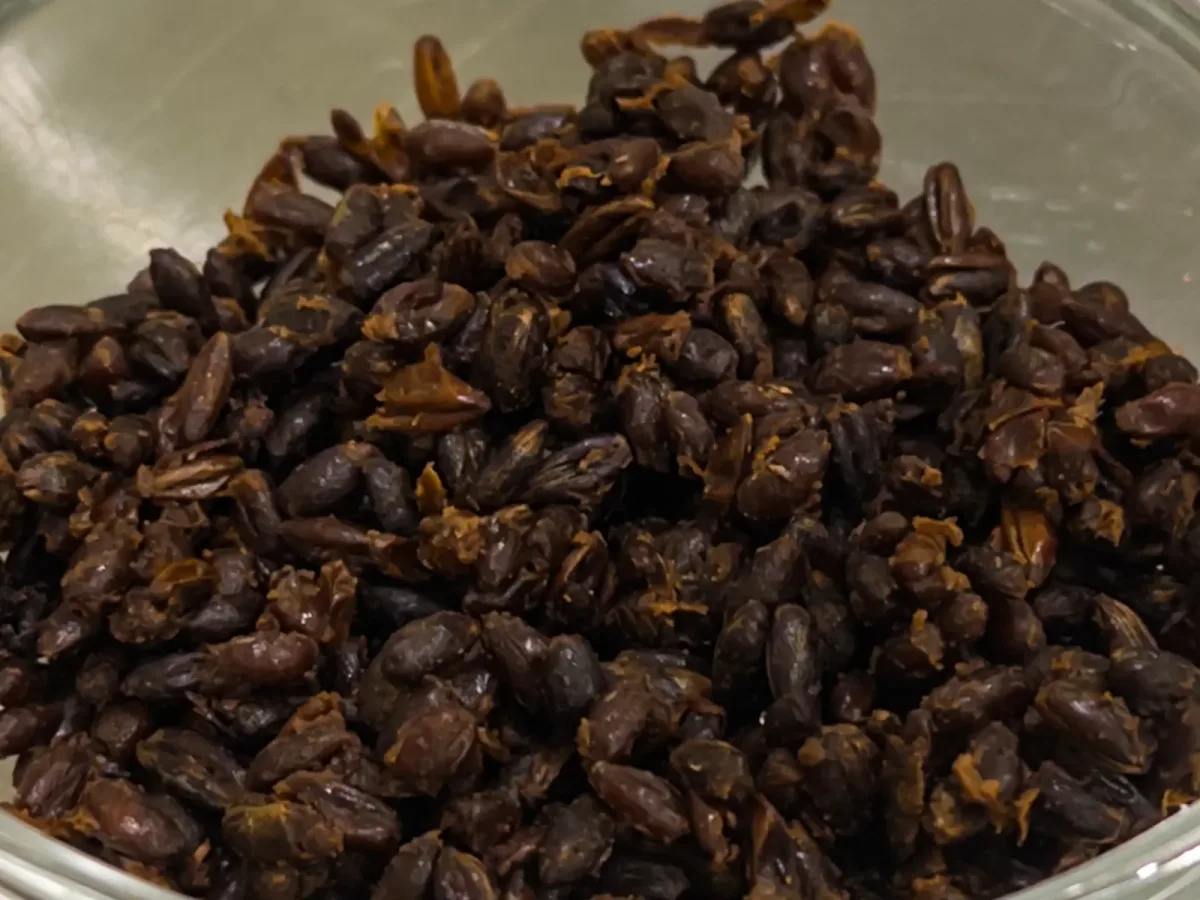 Soybeans after weeks of koji-driven blackening at 140°F, before roasting — our first pass at building chocolate-like precursors outside of cacao.
A Breakdown of Northeastern Substrates
Fava Bean is the most close to cacao in terms of distribution of storage proteins. It may require special processing to avoid excess oxygenation and generation of bean-like flavor from lipoxygenase enzymes (the typical ‘beany’ flavor producing enzyme found in many legumes, including soybeans).9 Processing can also reduce the vicine and convicine that make fava a hazard for people with G6PD deficiency, though the reported reductions vary and should not be treated as making it safe for everyone.10 Solid-state fermentation with Aspergillus oryzae or Rhizopus oligosporus changes its composition, antinutrients, and aroma in distinct ways, though neither has been shown to produce cocoa flavor.11
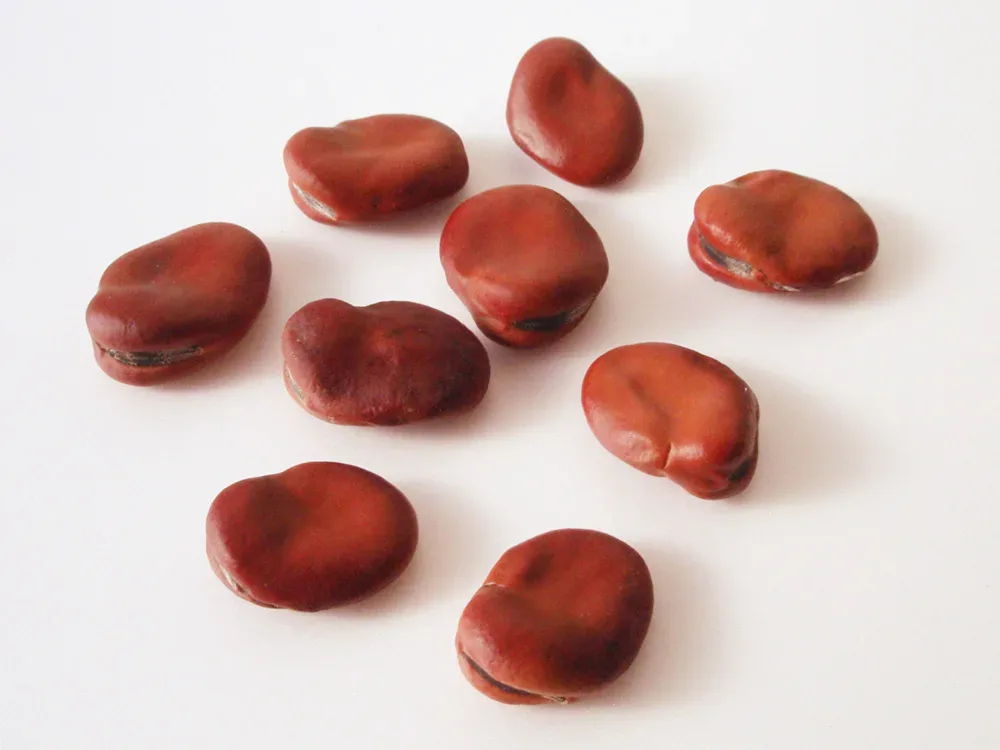 Dried fava (Vicia faba) seeds, the substrate whose globulin profile most closely resembles cacao. Photo: Batholith, Wikimedia Commons (public domain).

Sunflower Seed and Pumpkin Seed can add fat, protein, and coffee or chocolate like acids. Defatted meal or presscake may be the better option here.7
Barley, Rye, Wheat, Spelt, Oat, and Buckwheat are all potentially useful and abundant base substrates. By malting, you introduce a second batch of enzymes, which may contribute to chocolate-like malt flavor or inhibit it. By starting with roasted malt, you can limit the enzymatic activity from the malt itself. These are practical and abundant, which is a primary interest.12 Roasting grain dark enough for coffee- or chocolate-like flavor also raises acrylamide, which varies with variety, free asparagine, grain treatment, and roast conditions.1314
Soybean and Okara offer high levels of protein, some fat, and are importantly cheap and abundant.
Sorghum is potentially interesting, though dominated by unique kafirin proteins, which might contribute to a distinctive taste on its own, which is to be determined.
Chicory, Dandelion, and Sunchoke are interesting for their high levels of inulin, which when roasted slowly or enzymatically broken down, can contribute to a chocolate-like profile, as seen in previous experiments. The high level of inulin may have something to do with these ingredients historically being used as coffee substitutes.1516
Stale Bread, Brewer’s Spent Grain, and Presscakes are interesting because of their abundance as byproducts and high levels of protein, perhaps to be paired as a complement to another substrate. See Presscakes & Byproducts.
Comparables and Further Reading
- Dynamics of Cocoa Fermentation and Its Effect on Quality
- Cocoa Bean Proteins—Characterization, Changes and Modifications
- Single Origin Coffee Aroma: Volatile Characterization
- Faba Bean Flavor Effects from Processing to Consumer Acceptability
- Exploring the Impact of Solid-State Fermentation on Fava Bean Flour
- Roasted Rye as a Coffee Substitute: Methods for Reducing Acrylamide
- Black Garlic: Food Safety Considerations During Production and Storage
- Nukoko’s published cocoa-free chocolate patent
- Planet A Foods / ChoViva
- Voyage Foods
- WNWN Food Labs
- Endless Food Co.
- Nordic Food Lab: Roasting Koji
Bibliography
Footnotes
-
Owen R. Fennema, ed., Food Chemistry, 3rd ed. (Marcel Dekker, 1996), PDF p. 867; “Dynamics of Cocoa Fermentation and Its Effect on Quality”; “The Chemistry behind Chocolate Production”. Together these sources describe sucrose hydrolysis, proteolysis, polyphenol oxidation, and the conversion of sugars, amino acids, and peptides into roasted cocoa aroma. ↩
-
Nukoko, “Our Process”; Nukoko, “Cocoa-Free Chocolate,” WO2024095016A1; Planet A Foods, “Why Taste Comes First While Creating ChoViva”. These are company and patent descriptions, not independent sensory validation. The patent is useful here for its stated substrate-selection and process logic. ↩
-
“Cocoa Bean Proteins—Characterization, Changes and Modifications due to Ripening and Post-Harvest Processing”; “Partial Purification and Characterisation of the Peptide Precursors of the Cocoa-Specific Aroma Components,” Food Chemistry (2016). The work supports a role for hydrophilic vicilin-derived peptides, alongside free amino acids and reducing sugars, rather than treating total protein or total free amino acids as sufficient predictors of cocoa aroma. ↩
-
Harold McGee, On Food and Cooking: The Science and Lore of the Kitchen, rev. ed. (Scribner, 2004), PDF p. 713. McGee describes cacao roasting temperatures, the roughly 55% cocoa-butter content of nibs, refining, and conching. ↩
-
“Structure and Function of Seed Storage Proteins in Faba Bean” and “Identification and Quantification of Major Faba Bean Seed Proteins” describe globulins as the dominant fava seed-protein fraction and identify both 11S legumin and 7S vicilin/convicilin proteins. This compositional resemblance does not show that fava will release the same aroma-relevant peptide sequences as cacao. ↩
-
Owen R. Fennema, ed., Food Chemistry, 3rd ed. (Marcel Dekker, 1996), PDF p. 282. Fennema describes cocoa butter’s major triacylglycerols, six polymorphic forms, Form V as the desired glossy chocolate structure, and Form V–VI transformation in fat bloom. ↩
-
“Evaluation of Some In Vitro Bioactivities of Sunflower Phenolic Compounds” measured chlorogenic acid as the predominant phenolic in its sunflower flour. Sunflower phenolic content varies with cultivar, fraction, extraction method, and processing, so similarity to coffee should be treated as a research lead rather than equivalence. ↩ ↩2
-
Keith H. Steinkraus, Handbook of Indigenous Fermented Foods, 2nd ed. (Marcel Dekker, 1996), PDF pp. 494, 536, and 545; René Redzepi and David Zilber, The Noma Guide to Fermentation (Artisan, 2018), PDF p. 357. The sources describe koji cultivation near 28–30°C, temperature-dependent enzyme emphasis, and multiple A. oryzae proteases, peptidases, amylolytic activity, and glutaminase. ↩
-
“The Challenge of Breeding for Reduced Off-Flavor in Faba Bean Ingredients”; “Faba Bean Flavor Effects from Processing to Consumer Acceptability”. These reviews connect lipoxygenase-driven oxidation with aldehydes and other green or beany volatiles, while emphasizing that cultivar and processing both matter. ↩
-
“Faba Bean Processing: Thermal and Non-Thermal Processing on Chemical, Antinutritional Factors, and Pharmacological Properties”. Processing can reduce vicine and convicine, but the reported reductions vary and ordinary processing should not be presented as making fava safe for every person with G6PD deficiency. ↩
-
“Exploring the Impact of Solid-State Fermentation on Fava Bean Flour: A Comparative Study of Aspergillus oryzae and Rhizopus oligosporus”. The study reports distinct compositional, functional, antinutrient, and aroma changes from the two fungi; it does not establish that either process creates cocoa flavor. ↩
-
University of Maine Cooperative Extension, “Grains & Oilseeds”. Regional trials cover many of the small grains, pulses, and oilseeds discussed here. A trial listing demonstrates agronomic attention, not a stable local supply at the required price and volume. ↩
-
“Potential Antagonistic Effects of Acrylamide Mitigation during Coffee Roasting on Furfuryl Alcohol, Furan and 5-Hydroxymethylfurfural”. In the studied coffees, acrylamide decreased with darker roasting while furfuryl alcohol, furan, and HMF moved in the opposite direction. ↩
-
“Roasted Rye as a Coffee Substitute: Methods for Reducing Acrylamide”. The study connects rye variety, free asparagine, grain treatment, and roast conditions with acrylamide formation; its exact mitigation results should not be generalized to every grain or legume. ↩
-
John Vaughan and Catherine Geissler, The New Oxford Book of Food Plants, 2nd ed. (Oxford University Press, 2009), p. 124 (PDF p. 159). The authors describe chicory, dandelion, barley, rye, fig, beetroot, lupin, and acorn among historical coffee substitutes or additions. ↩
-
“Identification of Characterizing Aroma Components of Roasted Chicory ‘Coffee’ Brews”. The study identified rotundone as the most potent measured odorant and also found several important caramel- and sweet-smelling compounds. ↩