
Declining Drinking with Less Alternatives
In 2025, only 54% of Americans reported that they drank alcohol. This was the lowest share in Gallup’s some ninety years of polling.1 Yet, most non-alcoholic drinks are imitative of an alcoholic counterpart, and even then — by our estimation — less complex. There’s wine without the alcohol, beer without the alcohol, and cocktails without the spirit, which are oftentimes more of like juice. Ethanol plays a role independent of intoxication. It is a solvent for aroma, adds body to a drink, and changes the perception of sweetness, heat, and tannins.2
Nevertheless, these can be great drinks; but we believe that the world of non-alcoholic drinks is underdeveloped given the continuing trend of decreased alcohol consumption. Now, and perhaps in the future, non-alcoholic drinks may be the choice of the majority. Instead, we’re curious what can be done that is developed in its own right, rather than de-alcoholized drinks. This includes fermenting with low-alcohol yeast strains, kombucha and jun, and much more. For us, this also means understanding the role of abundant Northeastern ingredients in the construction of such drinks.
Both the taste of the drink and the ability for the drink to replace the “sippability” of alcoholic drinks, which alternatives like juice oftentimes lack, an important feature of the social component of drinking together.
Drinks of the Northeast
In the Northeast, we might consider where our local sources of sweetness, bitterness, and acidity can come from, all flavors which contribute to the balance of a well-executed non-alcoholic drink. Sweetness, which we elaborate on in our project on Northeastern sweeteners, can come from maple sap and syrup, honey, malted grain,3 enzyme-saccharified starch,4 and more, each carrying its own aroma and taste. Acid is abundant: apples, verjus, grapes, aronia, crabapples, sumac, rhubarb, and vinegars and lacto-ferments.5 Tannins and bitterness can come from aronia, cider apples and crabapples, hops, roasted vegetables, and more. A number of these crops, many of which are native, such as aronia and honeyberry, are compelling new-yet-old additions to the Northeastern agricultural landscape.6 Body can be produced by the introduction of soluble fibers through oat and barley, amazake, and plant milks, or enzymatic breakdown into peptides and dextrins.
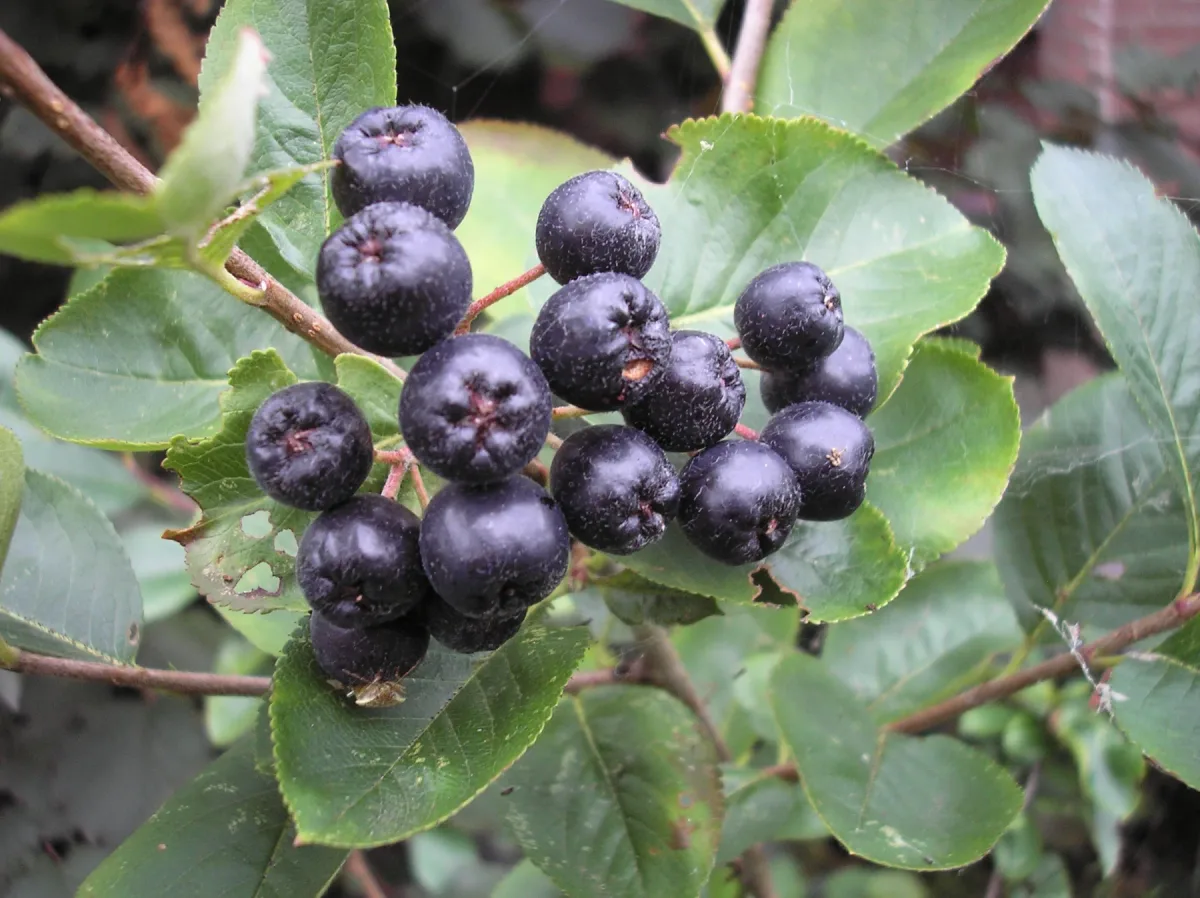 Aronia berries, a native cold-climate crop whose sourness and astringency make it better suited to blending than to standing alone. Photo: MiraculixHB, Wikimedia Commons (public domain).

Hops are especially compelling, for both their diversity and the fact that New York produced most of the country’s hop crop in 1880, and are now given much attention by Cornell and other breeders.7
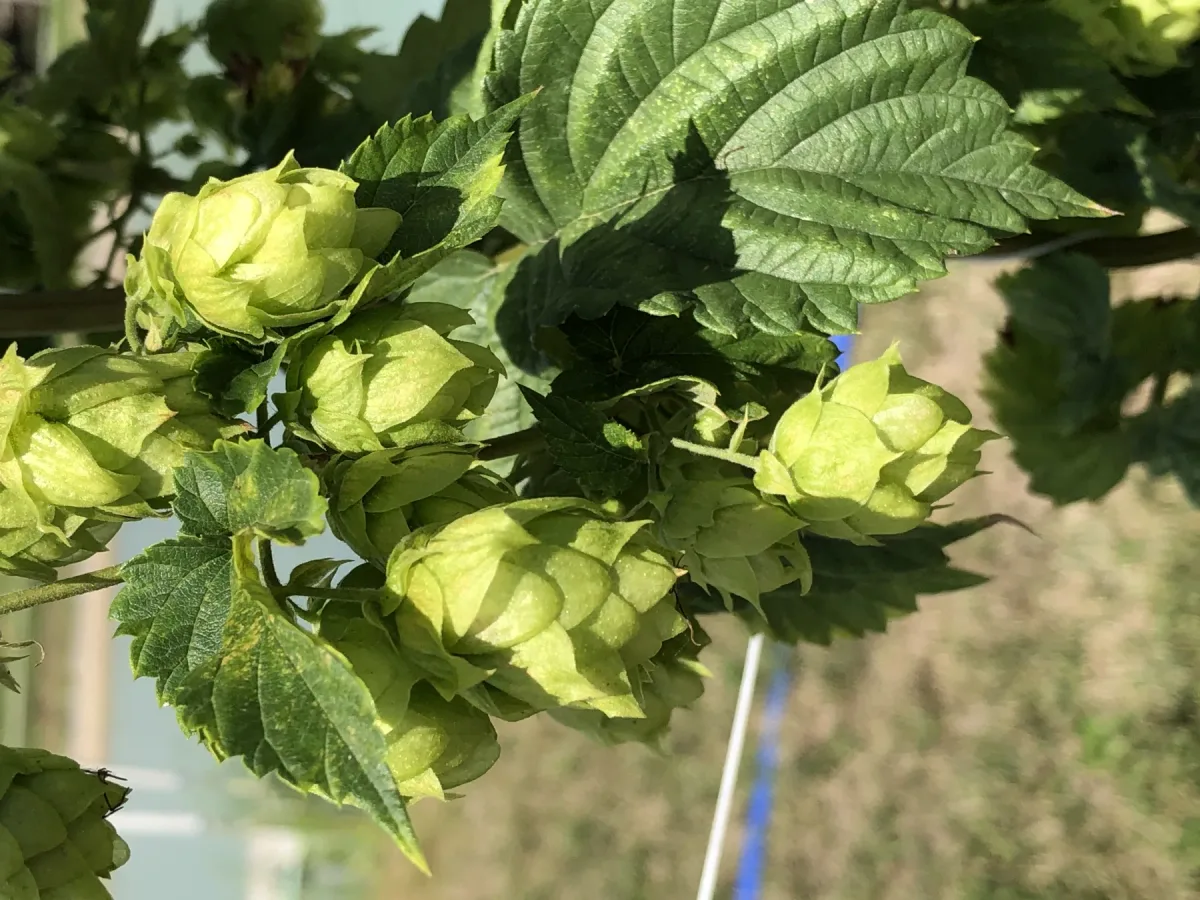 Hop cones on the bine at a hop yard. Photo: Mbrickn, Wikimedia Commons (CC BY 4.0).

To give a drink sippability, we’ll experiment with a number of flavors which in large amounts may be overwhelming, but in small amounts are pleasurable, not dissimilar from alcohol. These may include bitterness, smokiness, spice, cooling / numbing (as from mint or sichuan peppercorn), acidity, saltiness, and more. For similar historical processes, see the history of gruit.
Fermented and Non-Fermented Routes
Fermentation is an attractive route, because it both creates intense flavors such as acidity and contributes to the complexity of aroma. Now, there are a number of low alcoholic yeast strains (for example) being developed that can contribute the flavors of beers, ciders, and wines without the development of significant amounts of alcohol. Of course, there are existing low alcoholic fermentation cultures and techniques, such as kombucha, jun, water kefir, lacto-fermentation, and more.8 Kombucha and jun, instead of being built on teas, can feed on mineral-dense alternatives, such as fireweed, chamomile, apple blossoms, and more.
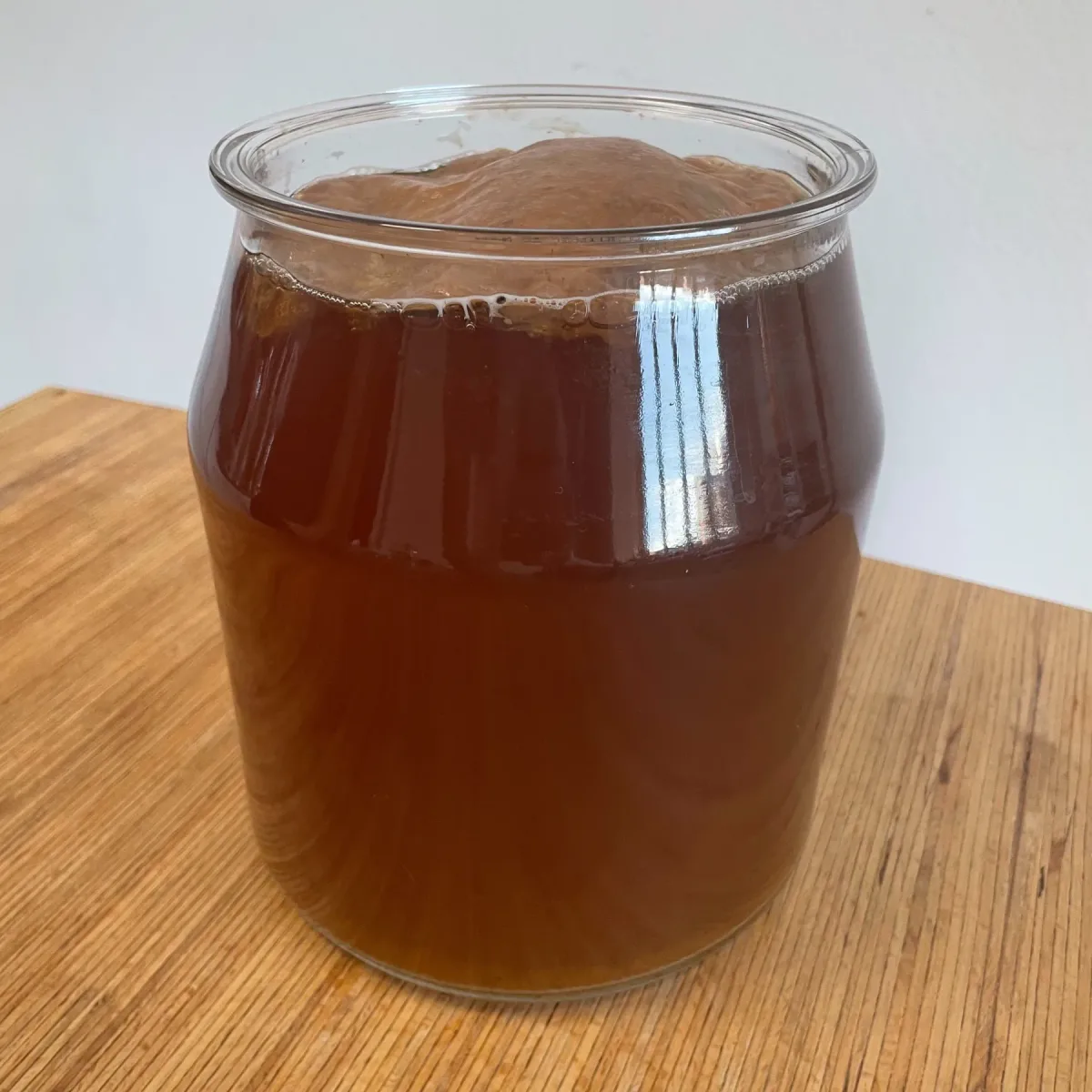 A jar of kombucha mid-ferment, its SCOBY forming across the surface. Photo: Shisma, Wikimedia Commons (CC0).

Teas and Coffee-Like Drinks
Steeped and hot drinks we’ll put in its own category, which is covered separately in our project exploring Northeastern teas. There’s also our exploration of coffee and chocolate alternatives, which serves as another foundation for flavor development in beverages.
Comparables and Further Reading
- Cornell Craft Beverage Analytical Laboratory
- Cornell Hard Cider Resources
- Cornell Hops Breeding Program
- Virginia Cooperative Extension: Kombucha Production and Safety
- Understanding the Lost Functionality of Ethanol in Non-Alcoholic Beer
- Characterizing and Improving the Sensory Response to Aronia Juice
Bibliography
Footnotes
-
Gallup, “U.S. Drinking Rate at New Low as Alcohol Concerns Surge” (2025). Gallup reported that 54% of U.S. adults said they consumed alcohol in its July 2025 survey, the lowest result in a trend beginning in 1939. ↩
-
“Understanding the Lost Functionality of Ethanol in Non-Alcoholic Beer Using Sensory Evaluation, Aroma Release and Molecular Hydrodynamics”; “Techniques for Dealcoholization of Wines: Their Impact on Wine Phenolic Composition, Volatile Composition, and Sensory Characteristics”. Ethanol’s contribution to body and aroma release is matrix-dependent, and dealcoholization methods can strip volatile aroma compounds along with the alcohol. ↩
-
“Quality Characteristics of Malts and Sikhye Made from Barley and Wheat Varieties Grown in Korea”. Sikhye is a Korean rice beverage saccharified with barley or wheat malt, with malt amylase activity tied directly to the finished drink’s sweetness. ↩
-
René Redzepi and David Zilber, The Noma Guide to Fermentation (Artisan, 2018), PDF p. 393; “Effect of Temperature on Saccharification and Oligosaccharide Production Efficiency in Koji Amazake”. Koji enzymes saccharify grain starch around 50–60°C/122–140°F, producing sweetness without yeast fermentation. ↩
-
Robert W. Hutkins, Microbiology and Technology of Fermented Foods (Blackwell Publishing, 2006), PDF pp. 362–363; Oregon State University Extension, “Preparing for Harvest: Grape Chemistry and Prefermentation Adjustments”. Apples are dominated by malic acid, while tartaric and malic are the major grape acids; two liquids can share a titratable acidity but differ in pH depending on that ratio. ↩
-
Cornell CALS, “Native ‘Superfruits’ Present Opportunities for NY Growers, Consumers”; “Characterizing and Improving the Sensory and Hedonic Responses to Polyphenol-Rich Aronia Berry Juice”. Cornell’s Willsboro trials include aronia, honeyberry, juneberry, and elderberry as cultivated cold-climate crops; aronia juice on its own tested as strongly sour and astringent, supporting its use as a blending component rather than a standalone drink. ↩
-
Cornell Small Farms, “Frequently Asked Questions When Starting Up a Hop Farm in New York”; Cornell Hops Breeding Program. New York produced 21 million pounds of dried hops in 1880; Cornell’s current breeding targets aromatic character, yield, and disease resistance for the state’s climate. ↩
-
Virginia Cooperative Extension, “What Do I Need to Know to Sell Kombucha at the Farmers Market?”; U.S. Alcohol and Tobacco Tax and Trade Bureau, “General Kombucha Requirements”. TTB regulation applies once kombucha reaches 0.5% ABV at any point, including through continued fermentation after bottling; pH is not a valid proxy for alcohol content. ↩