
Background
This is a one (or two, perhaps) ingredient veggie burger made by growing mycelium on cracked sorghum groats. The mycelium binds the groats together, forming a patty that absorbs fat and moisture, becoming juicy and bouncy very much like a beef patty.
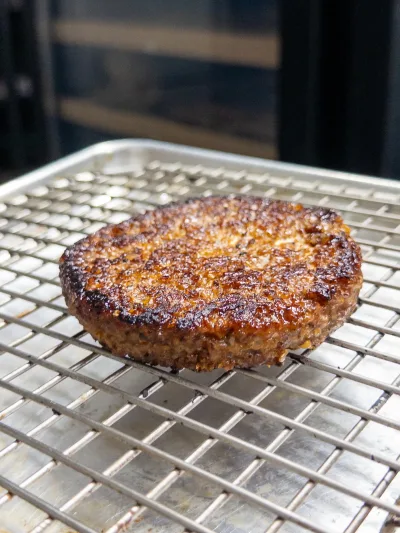
The mycelium also contributes to the umami taste of the patty, and in combination with additional savory sauces like shoyu, garum, or yeast extract, it truly begins to taste and feel like biting into meat!
Ingredients
Sorghum Groats (cracked) Mycelial Starter (Koji, Tempeh, or an edible basidiomycetes strain)
Instructions & Notes
It’s best to use a sorghum with a red hull and some of the hull still attached. The red antioxidant pigments in the hull will leech into the grain during cooking and give it the color of red meat.
Koji produces a better texture and flavor than tempeh, but takes longer to grow and is more sensitive to temperature and humidity. Tempeh will take about 24 hours and koji 48 hours of total incubation. Basidiomyetes species will vary.
For this, you’ll need a cracked sorghum. It can’t be too finely cracked, or the mold will have difficulty growing. The whole groats will not work, as the fungus will have difficulty penetrating the hull. We received our cracked grains from our friends over at Brooklyn Granary and Mill and from Carbon Sponge (who supply the whole grain).
Then, we soak the grains in cold water for 15 minutes. This is just enough time to hydrate the grains without overhydrating them. It is very important to regulate moisture levels here, as the fungus (any of the above) will have difficulty growing on oversaturated grains, especially if there is surface moisture. Afterwards, we wash the grain in a colander to remove any small pieces (these will adversely affect the burger texture) and rinse off as much surface starch as possible (similar to making rice).
Then, we steam for 30 minutes. This will hydrate the grains just enough. After letting it cool until it’s easy enough to handle, break apart any clumps with your hands. You should be able to feel each individual ‘grain’ (really, part of the grain) with your hands as distinct. The texture should come out somewhat like boiled rice that’s been left on the counter and air dried, the kind you might want to make fried rice with.
Then, inoculate with your fungal strain according to its optimal temperature, timing, humidity, and ratio of starter. For koji, we inoculated in ring molds at 87f and 80% humidity for 48 hours. It may be necessary to ‘cut’ your starter by mixing in some pasteurized (this can be done by toasting on the stovetop) flour.
When done, it should be bound tightly in mycelium. Then, grill in plenty of oil or oil liberally and cook on a charcoal or wood grill for optimal flavor. If you want it to taste even meatier, you can use a shoyu, garum, or yeast extract. Just like a normal burger, you don’t want to overcook it or it will become too dry.
More
This is a nuanced process and it’s taken us lots of trial and error to optimize it. If you’d like to work with us to utilize this recipe, send us a note at info@northeastlarder.com or send us a DM on Instagram @northeastlarder. If you make it, please reach out to us and we’d love to share!
If you’re interested in a pop-up in NYC, please send us a note or engage with the Instagram post!